A Trip on Lake Ladoga
We'd wanted to paddle Lake Ladoga for ages, but the difficult logistics put us off: while you can reach Lake Onega by train, there's no direct route to Ladoga. But that year we pulled off our most complicated approach yet, and now Ladoga held no fear for us.
We left Moscow on the three-o'clock Sapsan. At Moskovsky station we picked up the new "Vektor-2" from Triton and got into a taxi to Sortavala. I'd paid for the ride in advance on the "Taxovichkoff" website, but they stubbornly refused to assign me a car a day, or even a couple of hours, ahead. After some brief bickering over the phone, a driver turned up and we set off cheerfully toward ever-whiter nights.
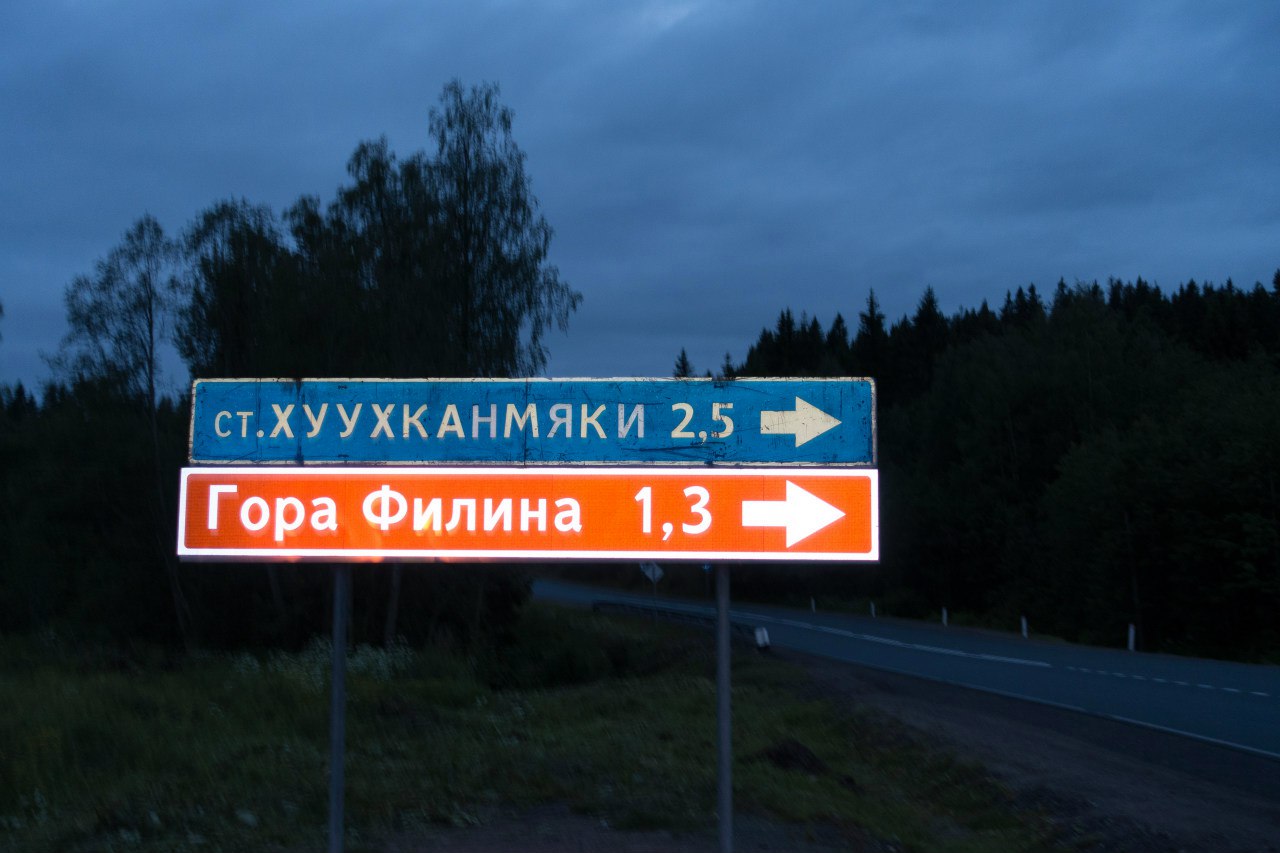
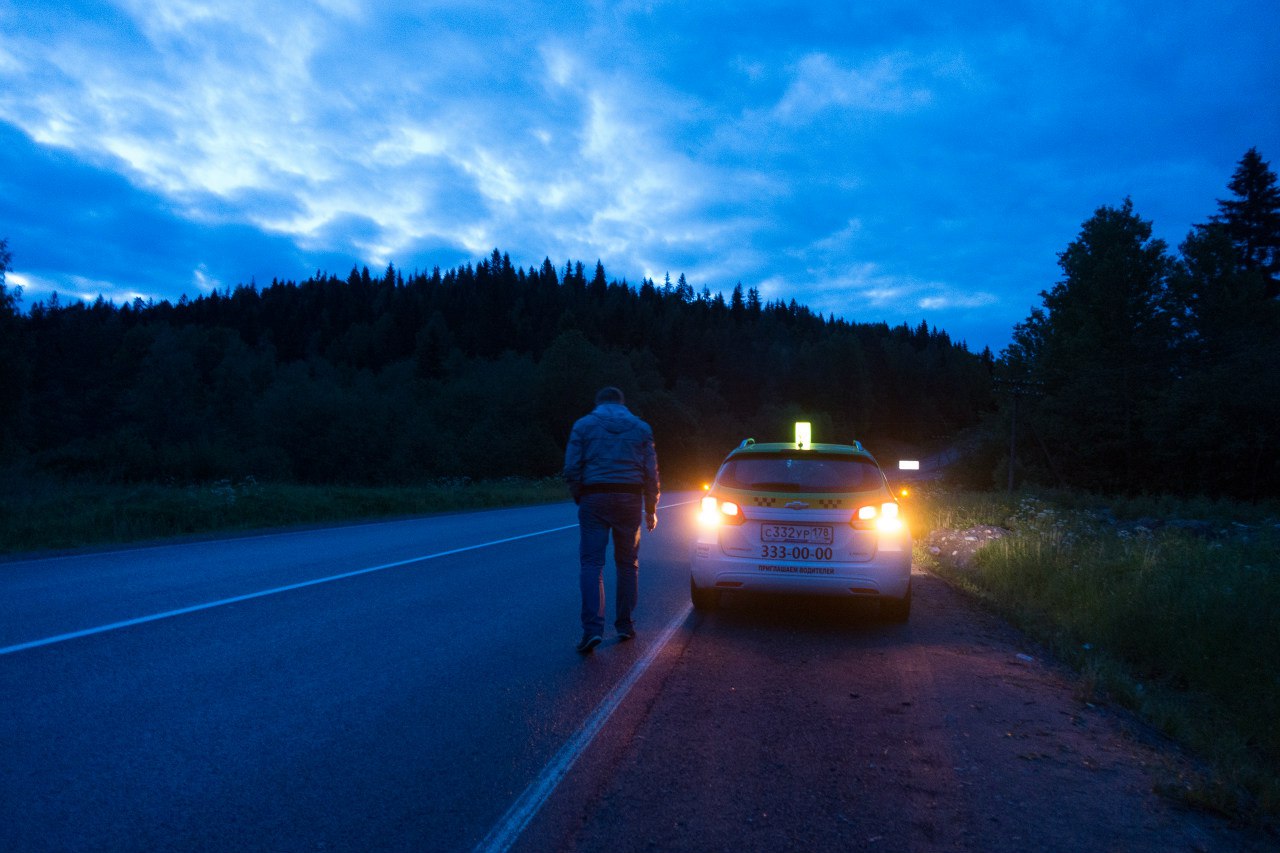
The drive to Sortavala took almost five hours. Karelia surprised us with its steep, winding roads, where we had to slow way down. We checked into the house only by one in the morning.
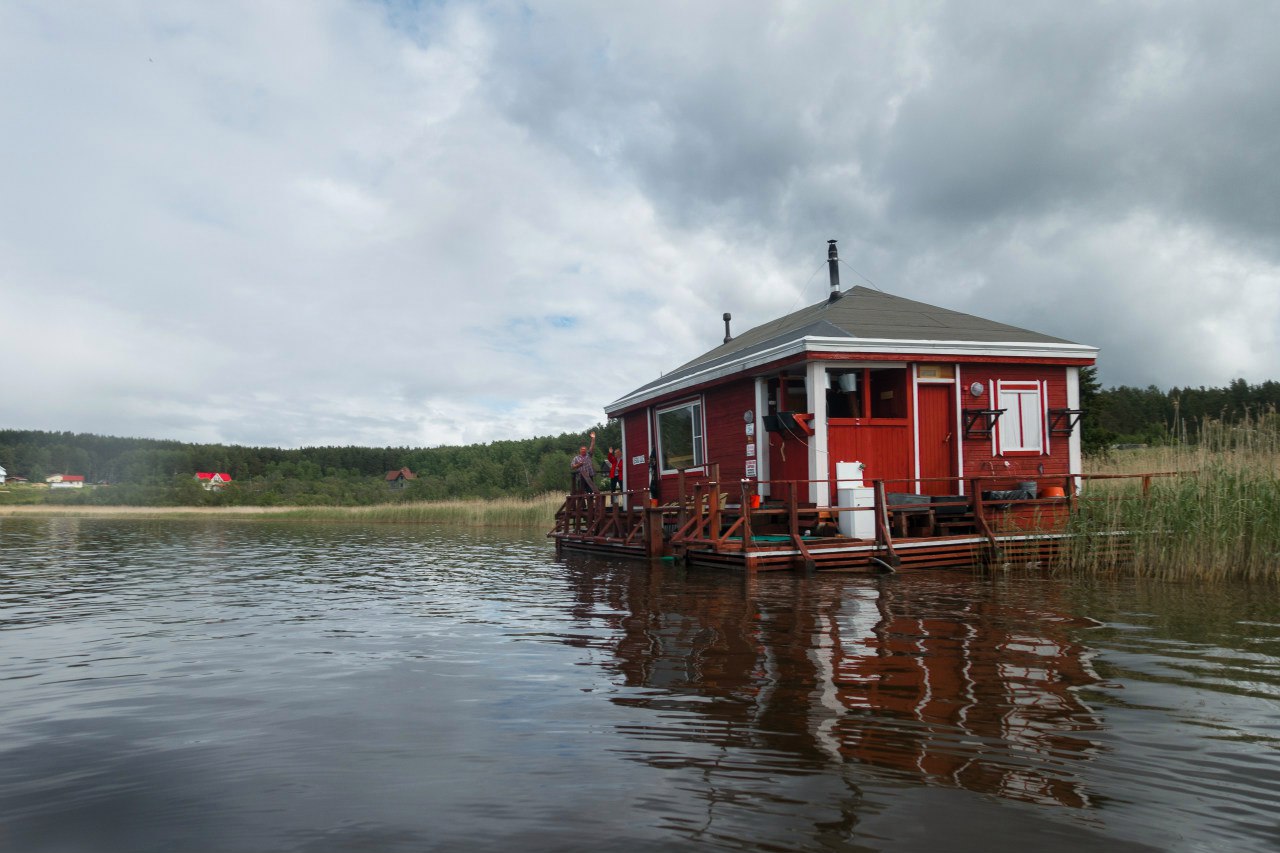
We stayed in literally the last house available on Booking. Bungalo Spa is a cabin on the water — an excellent choice for starting a kayak trip right from the doorstep. The owner, Alexander, was waiting for us. He'd prepared five teapots of herbal teas and left the banya warm so we could wash up. In conversation it came out that he's a banya master, has publications in medical journals on the topic of athletic recovery via the banya, and every autumn organizes a local banya festival. We regretted not staying another day, but now at least we know where to go for a good banya.
First — the route line. We didn't manage to reach Priozersk because of the bad weather, and we decided that an extra day in Piter was better than getting soaked in the skerries.
Ladoga skerries
Day 1First campsite
In the morning the sky is overcast, we didn't get much sleep, and I go to assemble the new kayak right on the house's veranda. A big plus of the Vektor is that you can assemble it solo. I spend a lot of time fitting the rudder, and I'll spend more on it over the course of the trip. My thoughts and impressions of the Vektor are at the end of the story.
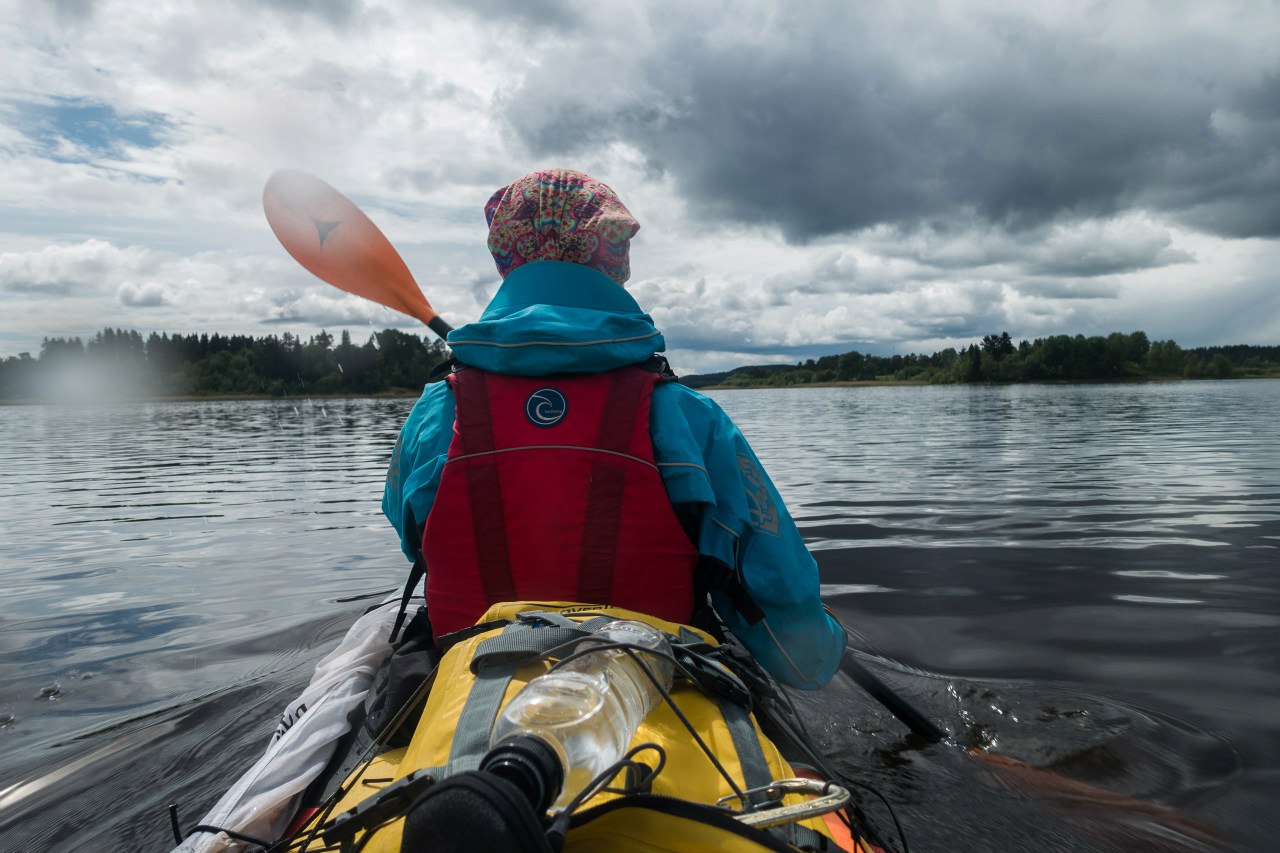
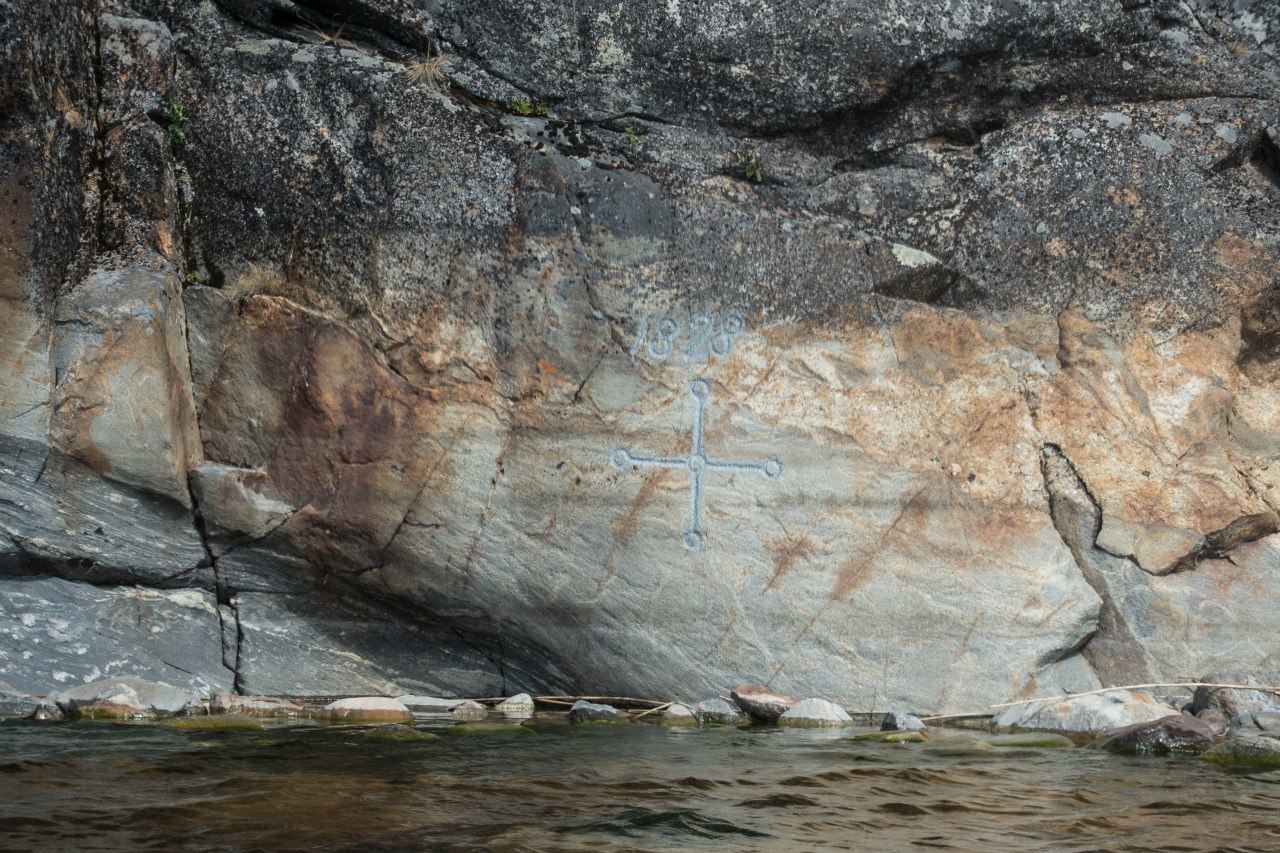
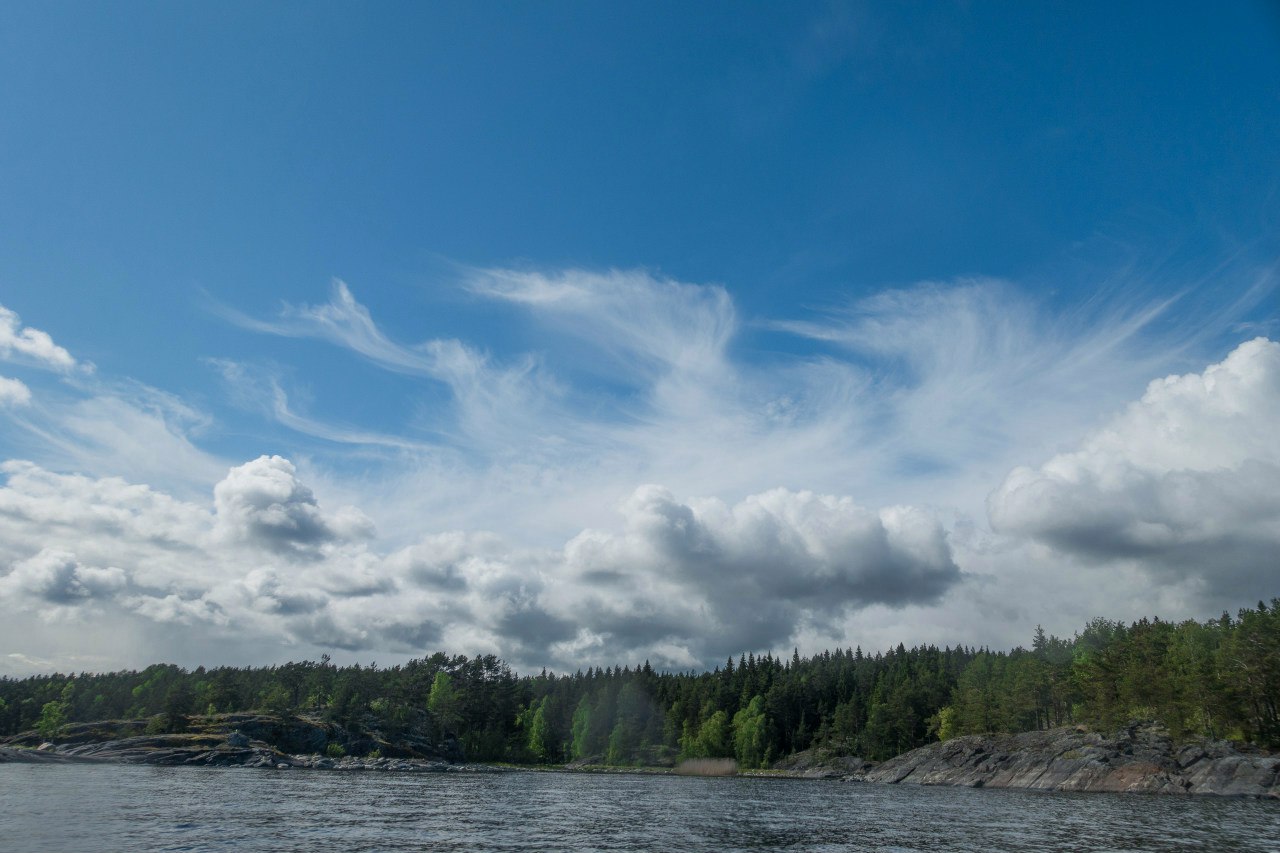
It's hard to get going after a long journey, and we packed up very unhurriedly by lunchtime, setting off at one in the afternoon. We said goodbye to Alexander, spent a long time pulling on our brand-new spray skirts, and headed south.
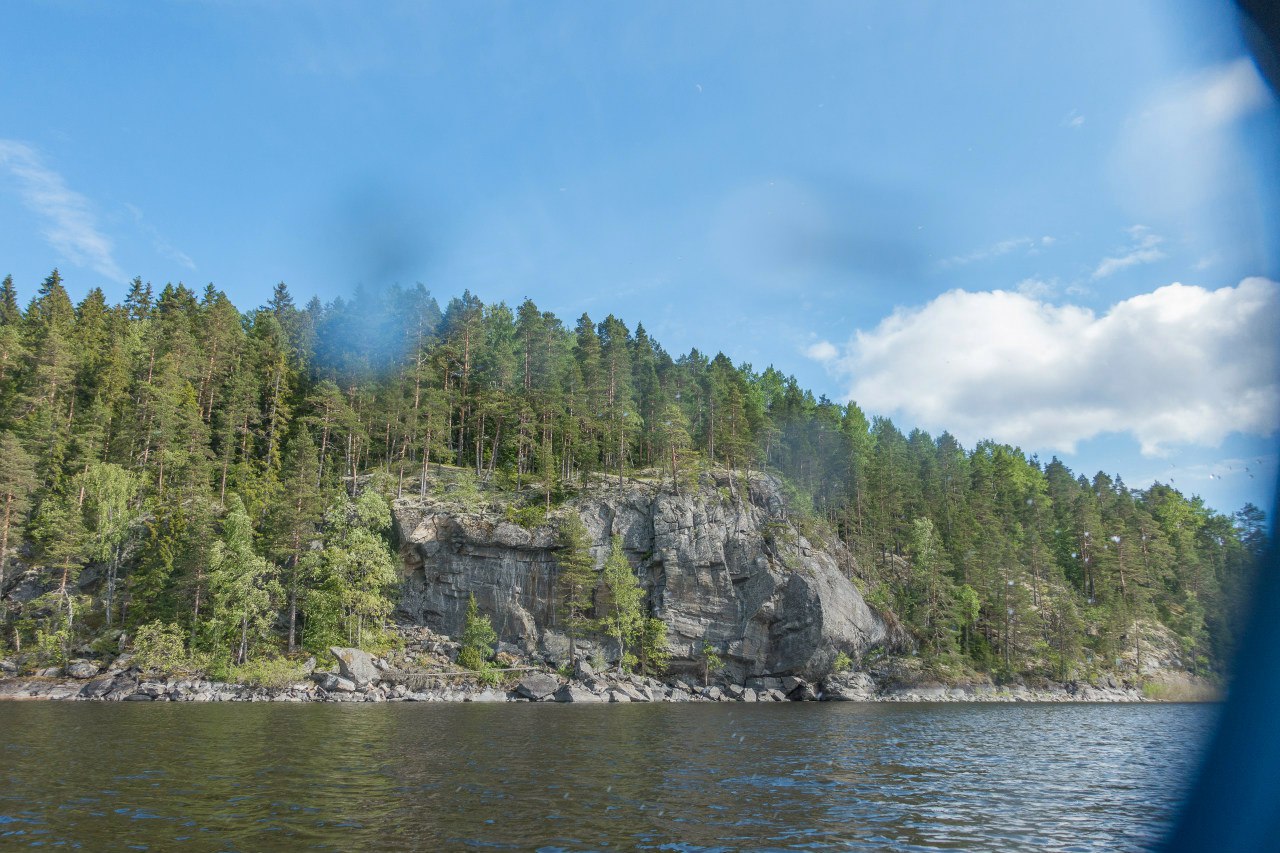
The islands rise more and more out of the water, sheer cliffs come into view. How long we'd wanted to see them! You could take a motorboat and tour the skerries, do deep water solo climbing and bouldering straight off the water.
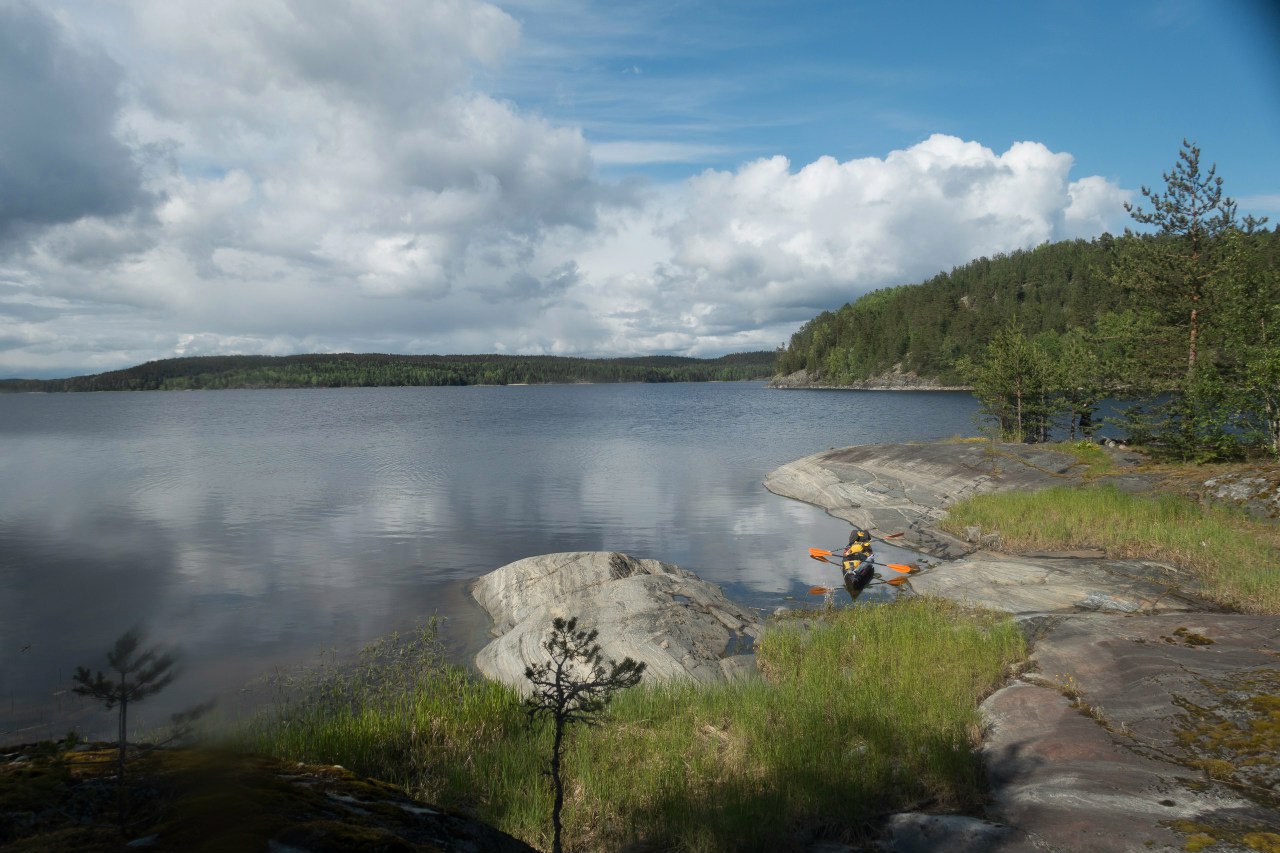
The day went by fast. We stopped for dinner on a very pleasant island 12 kilometers from the starting point and decided that we'd had enough, time to rest. I'm already nodding off.
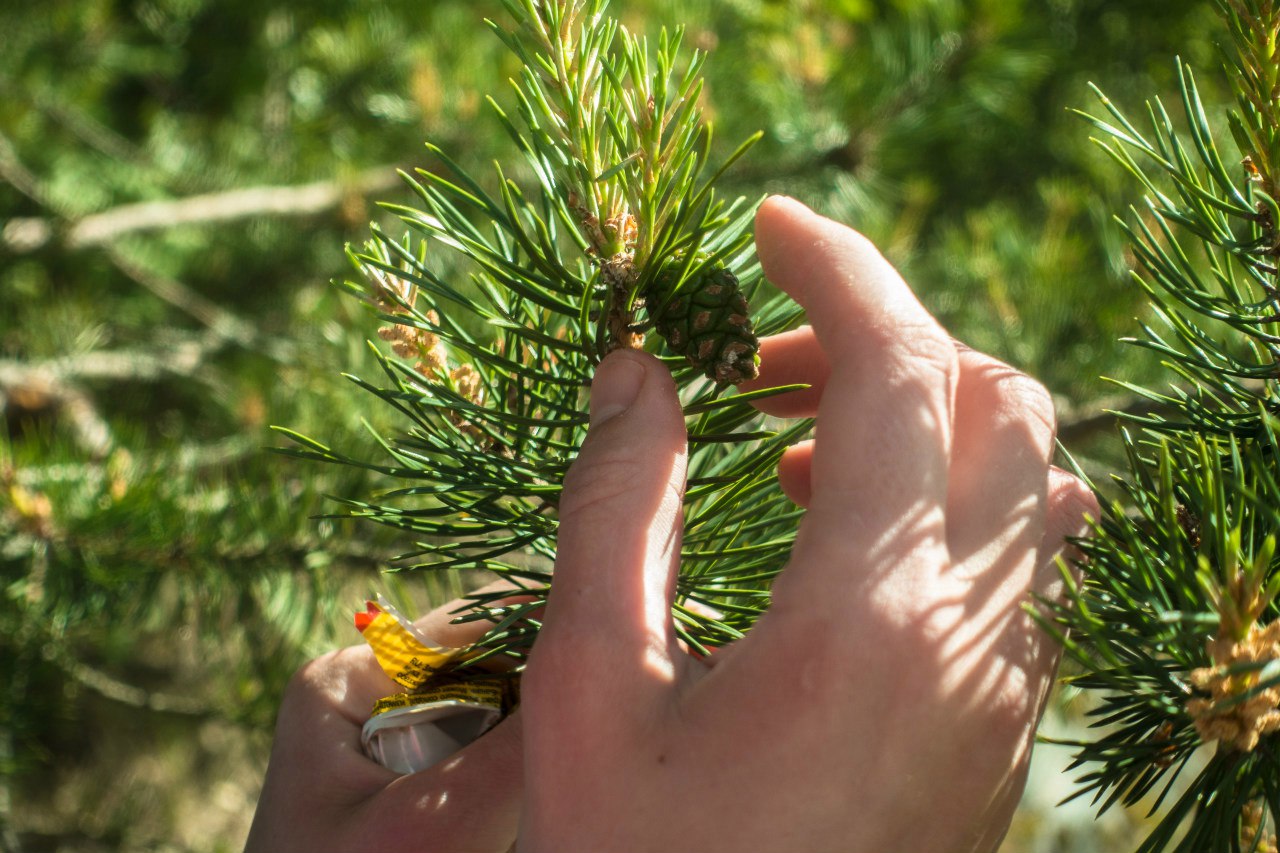
Dasha immediately set off to gather green pine cones — she can't shake the idea of making jam from cones. On the island she collected a whole bag, and by the end of the trip we'll have accumulated a couple of kilograms of pleasant-smelling cones.
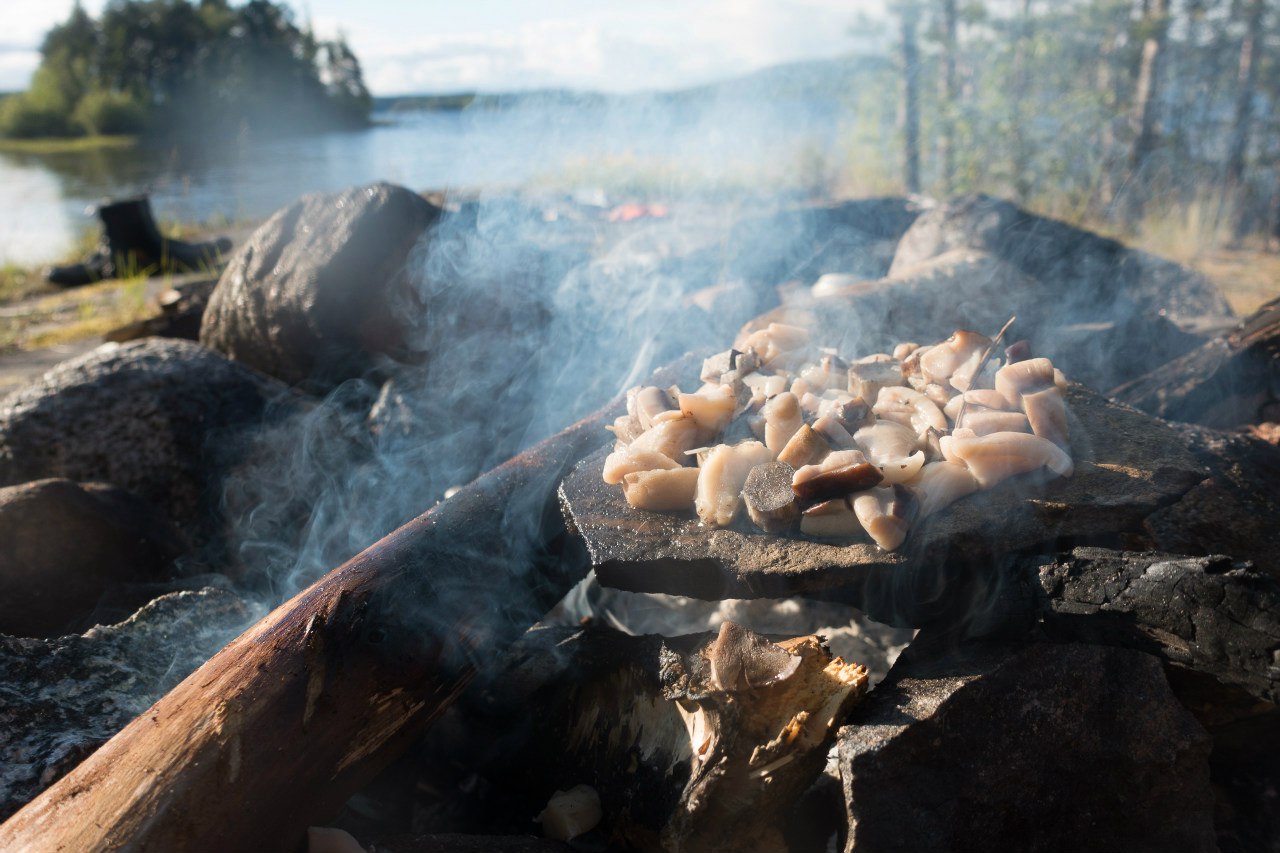
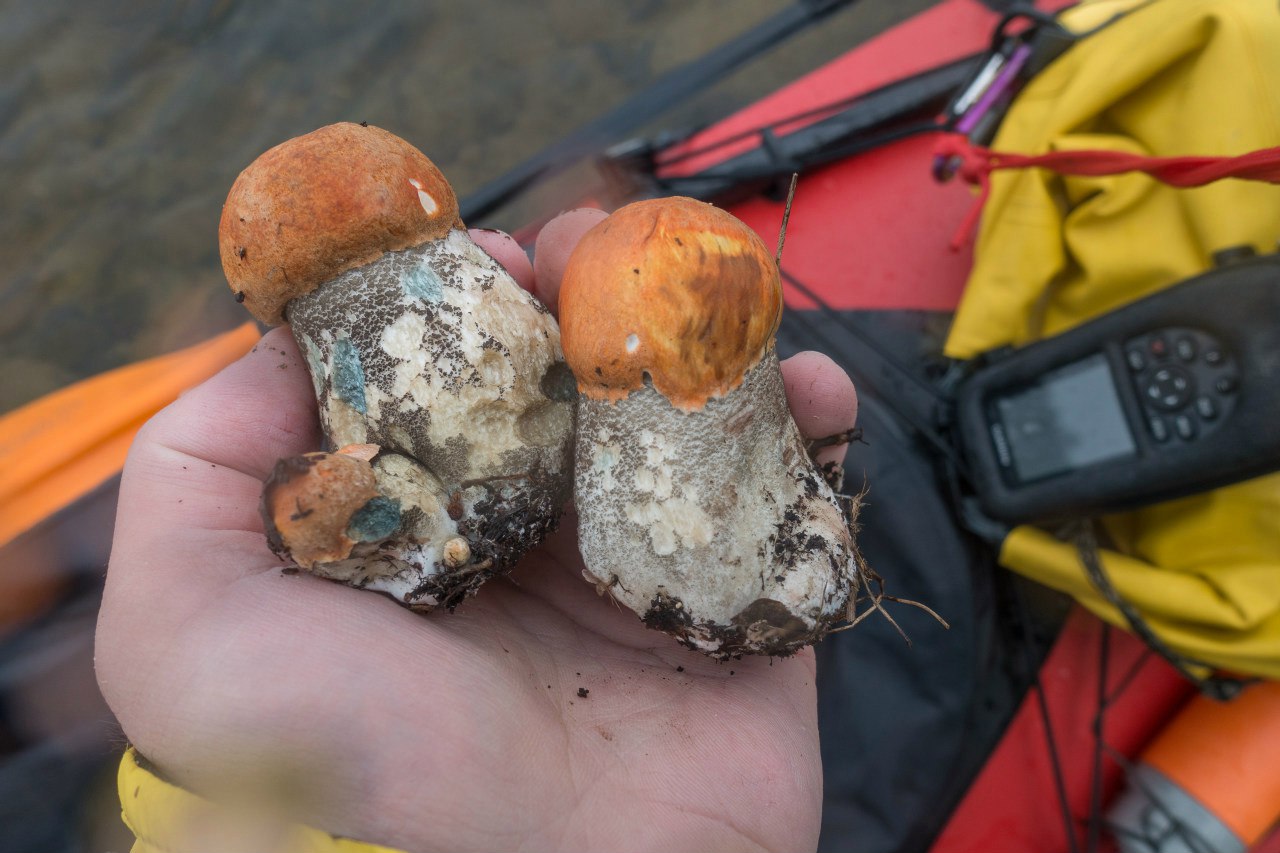
A couple of steps from the tent I found some mushrooms, and we even tried to fry them on a flat stone, but the experiment failed — too much effort went into keeping a fire going with damp wood, and I went to sleep. At eight in the evening the sun was shining briskly on the tent, and I climbed out of my sleeping bag from the heat. At night, though, I had to crawl back in and even got a bit cold. Because of the wind and damp I had to put on my top base layer (I like sleeping without it).
Day 2Kukha Island
The morning brought what at first glance was good news. A northeasterly wind promised a day under sail, and we, after a quick breakfast, set off. In the skerries we saw our first seals. Besides seals, the skerries served up other surprises too. It turned out the wind roams in all directions among them, and we went from a brisk tailwind to slamming straight into a wall of headwind. The wonders don't stop until you reach open water.
I still hadn't adjusted the steering, and the Vektor constantly pulls to the left, so you have to steer against it. This makes me really angry, I simply don't understand what's happening. We raised the rudder out of the water and made a half-circle. The Vektor keeps trying to turn its starboard side to the wind and has to be corrected constantly — this trait can't be called pleasant.
Luckily, after leaving the skerries the wind stabilized and blew from the northeast. We set the sail and cheerfully move along at a decent distance from shore. The sun is shining in defiance of every forecast. We have to stop to slather on sunscreen, and I put on a cap with a sun flap for the neck.
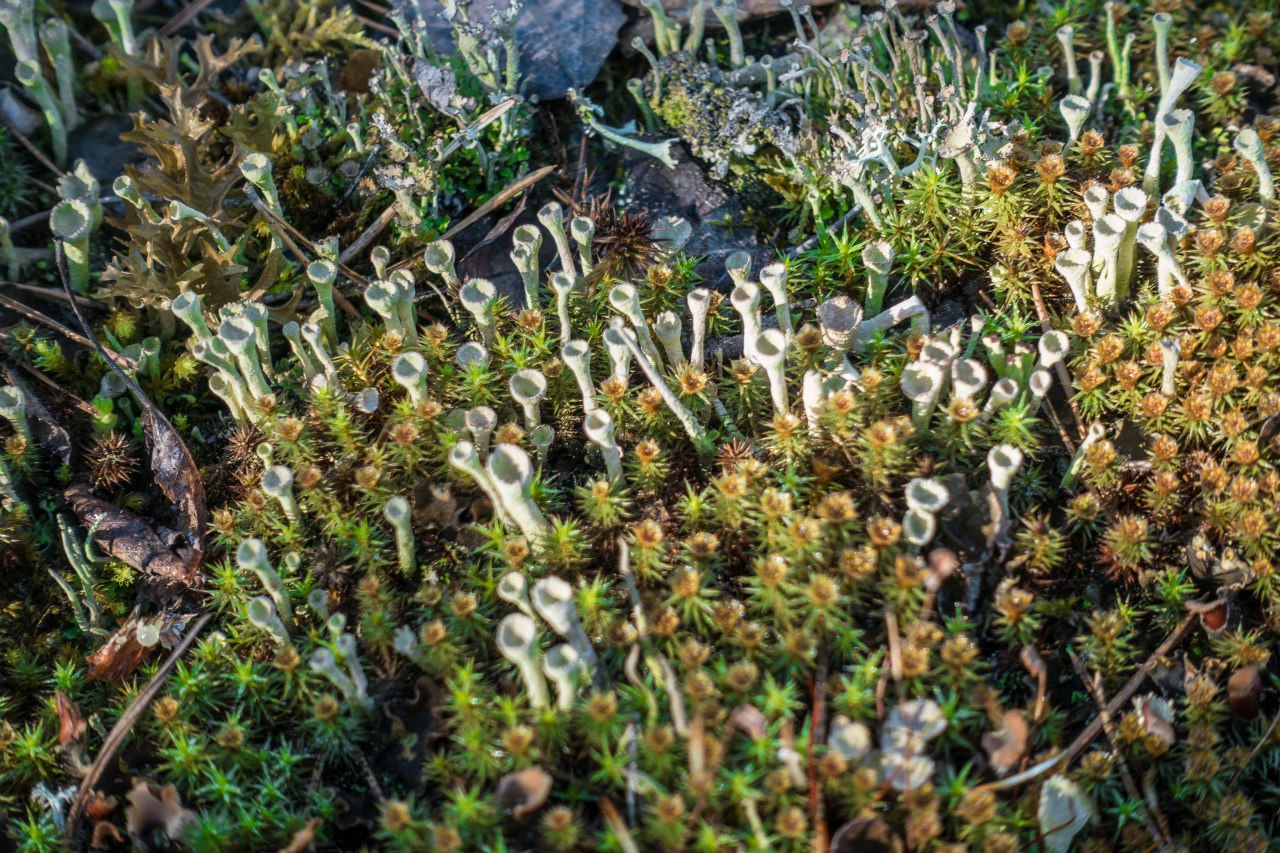
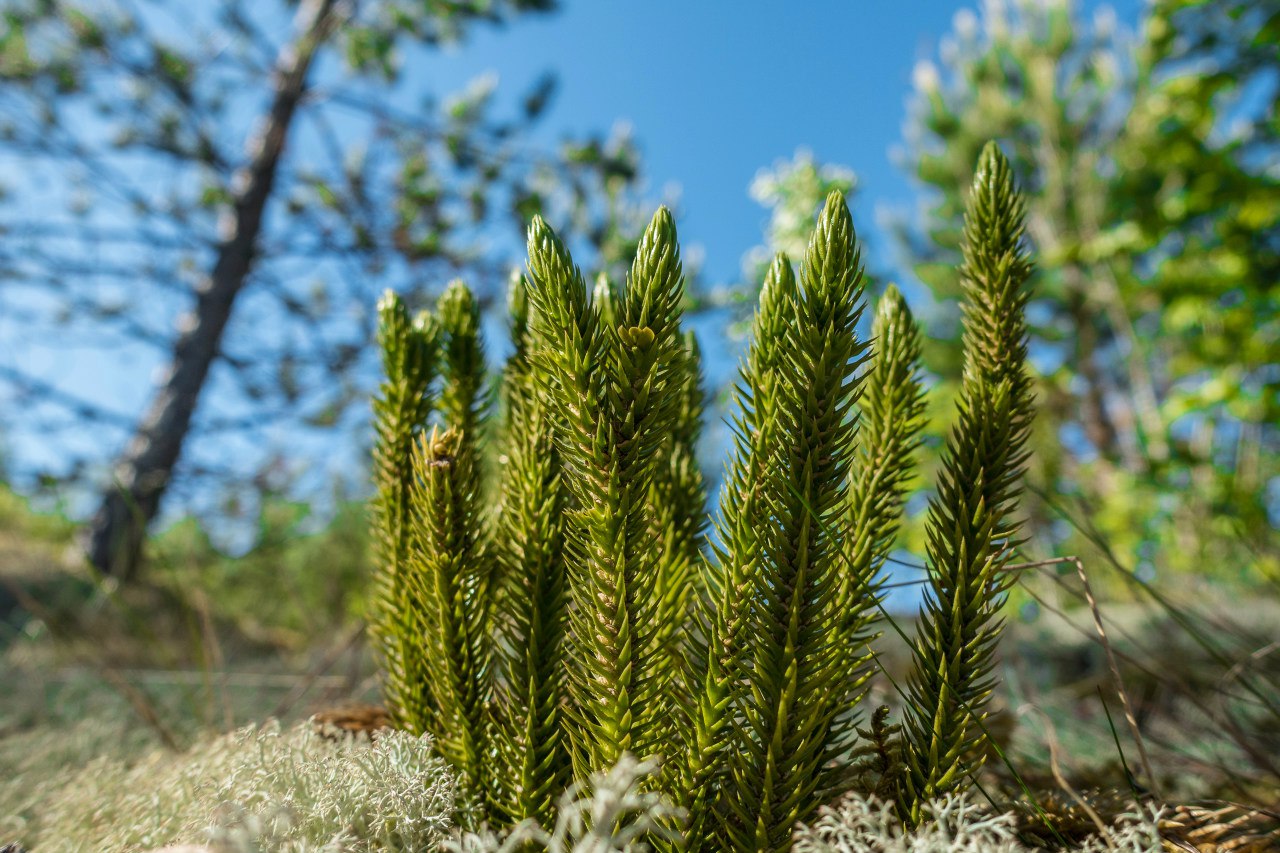
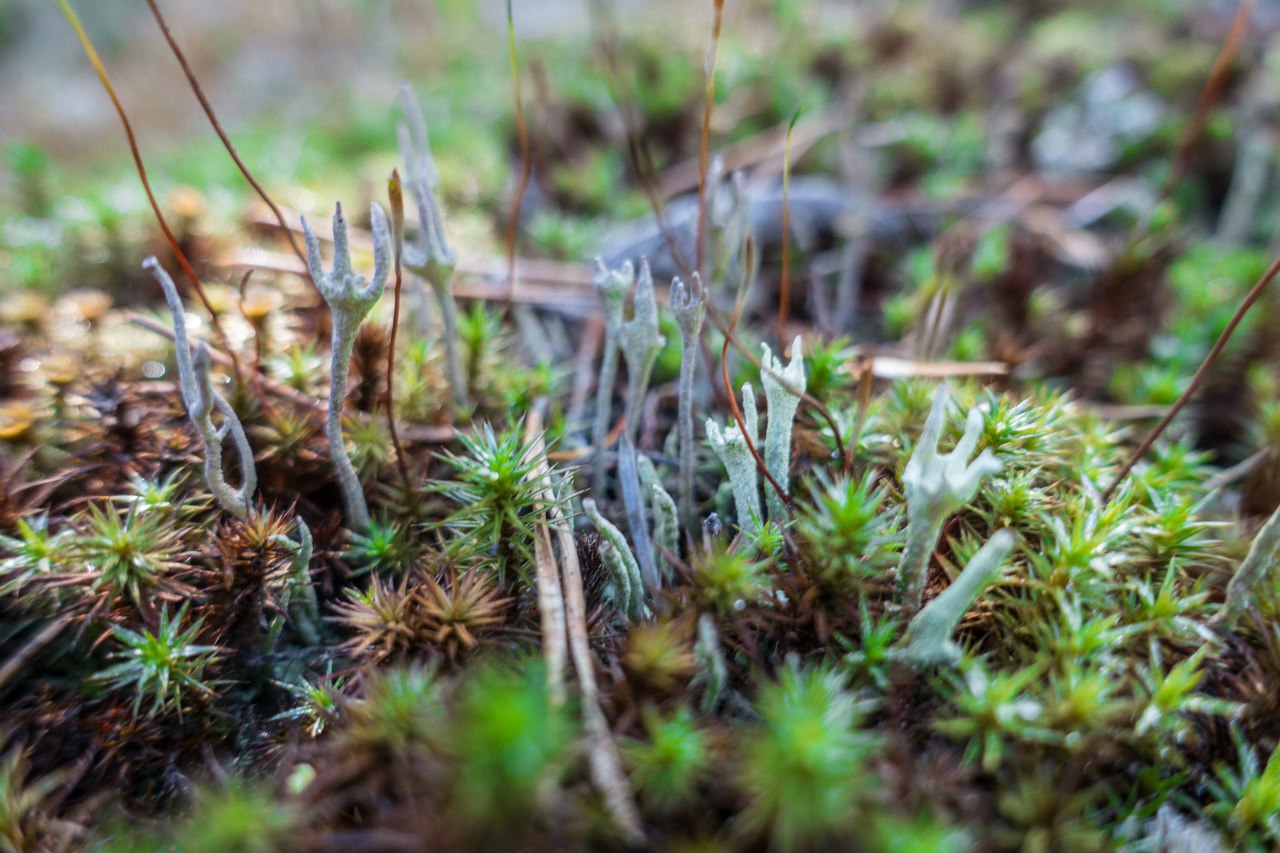
We pass a little island settled by gulls and find ourselves in a cloud of horrid midges. They get in everywhere and have no intention of leaving us alone. Our kayak is surrounded by vile creatures, which we try to kill at every opportunity. After about an hour their concentration finally drops to an acceptable level, just as we stop for lunch in the bay of an island covered with seals. The seals won't let us close, but from a distance they take an interest in our lunchtime routine.
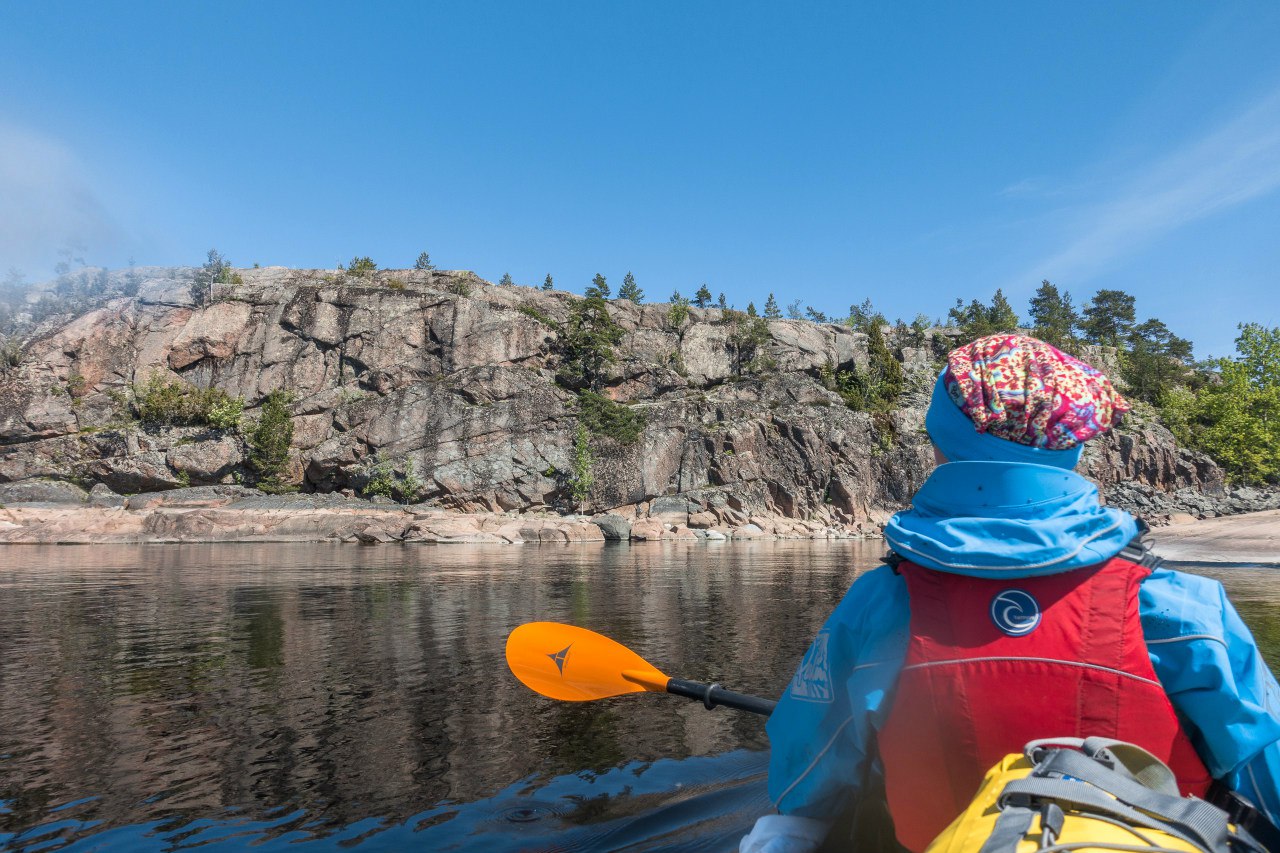
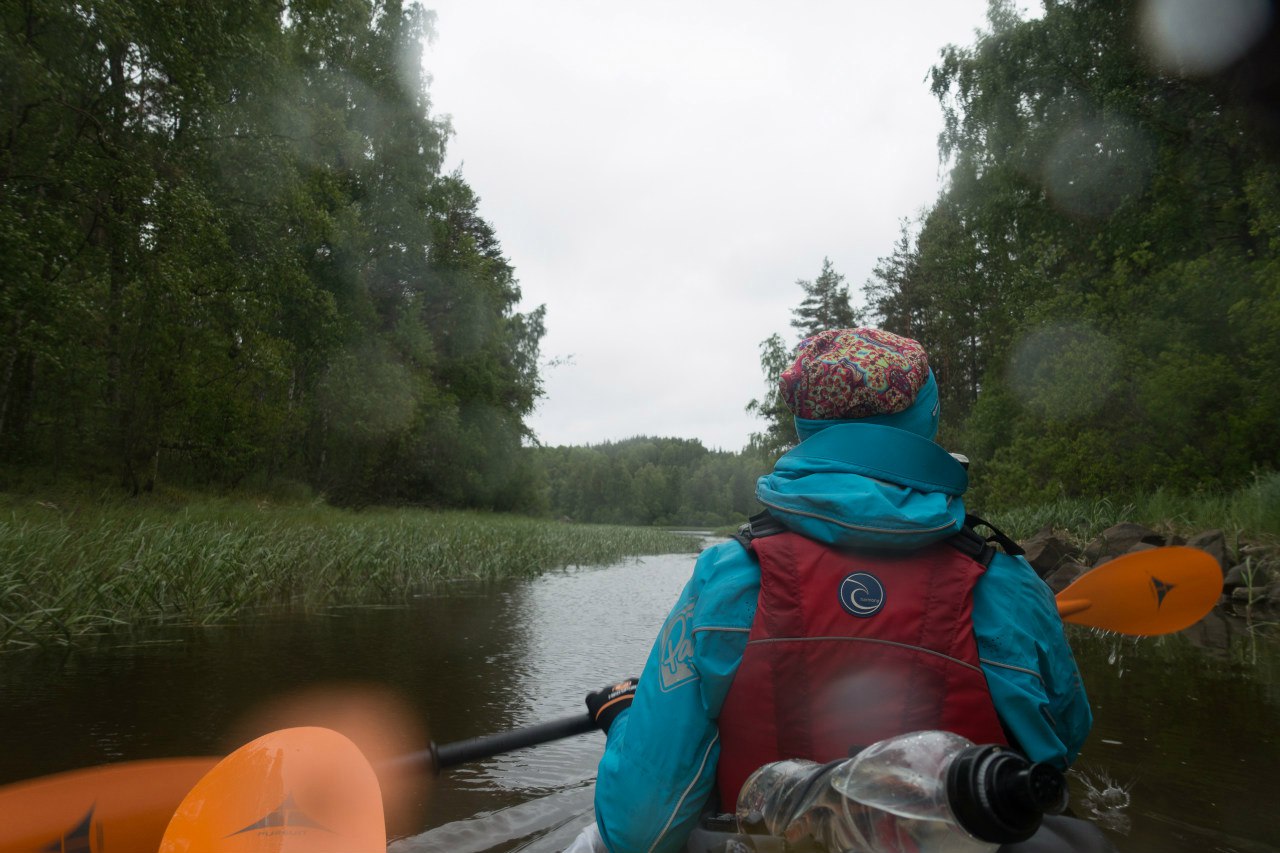
All around is that same beauty — cliffs descending into the water, little islands overgrown with austere Karelian vegetation. We walk around the island, rest, and paddle on. The plan for today is to cover at least 30 kilometers, and we even slightly exceed it, doing 35.
We camp on Kukha Island in Haukkaisenlahti Bay, but not in the most convenient spot. The catamaran crowd has already taken the place deep in the bay, sheltered from all winds. We're left to camp at a site that gets blown on straight from the lake. We spend another hour looking for alternatives, but decide the game isn't worth the candle.
We pitch the hangar tent and cook inside it, as on the White Sea. We don't much feel like walking around; Dasha sets off hunting for cones, and I try to get a fire going. The wind fans it up very quickly, but the wood burns through just as fast. The forecast for the next day calls for a northerly wind, and we take that as a good sign. We want to head out onto the big water and reach Priozersk.
Day 3Tervu and retreat to Piter
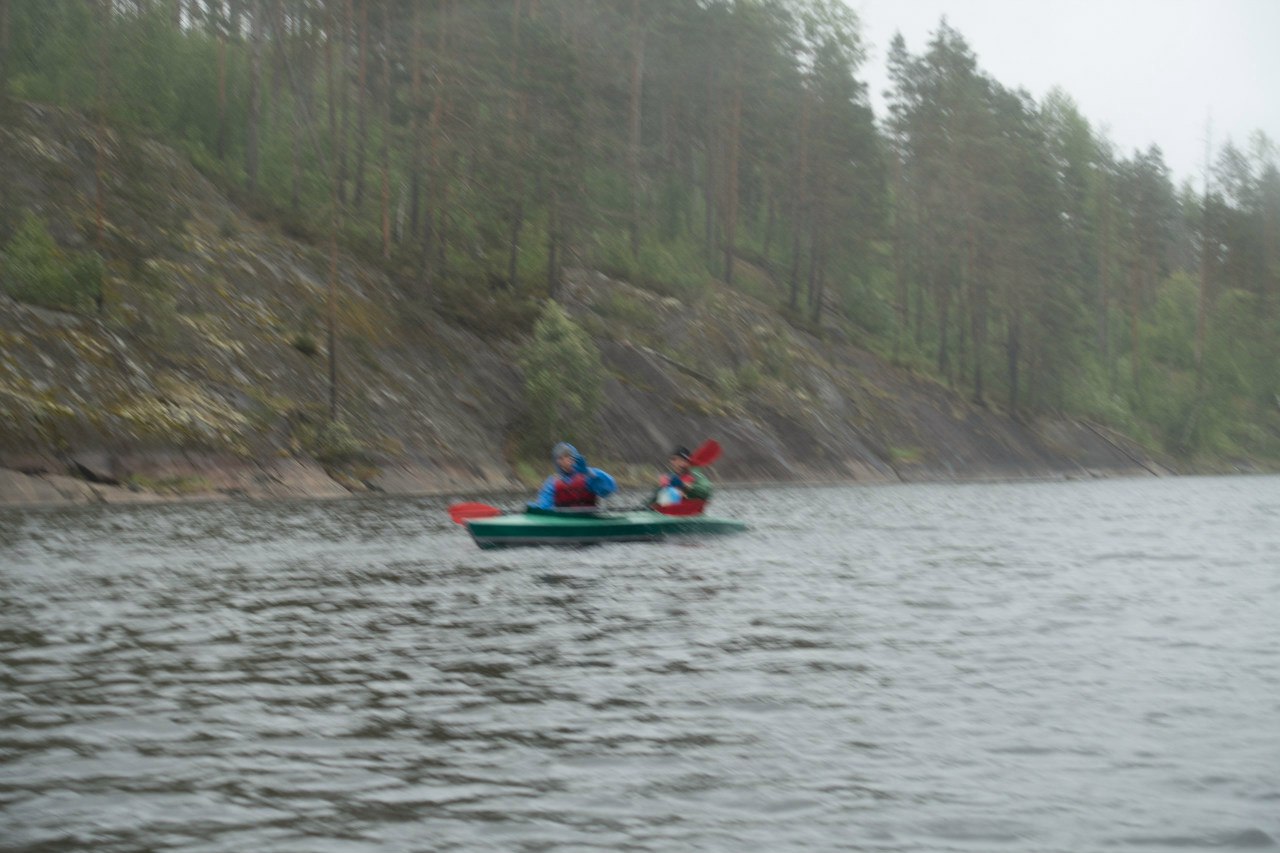
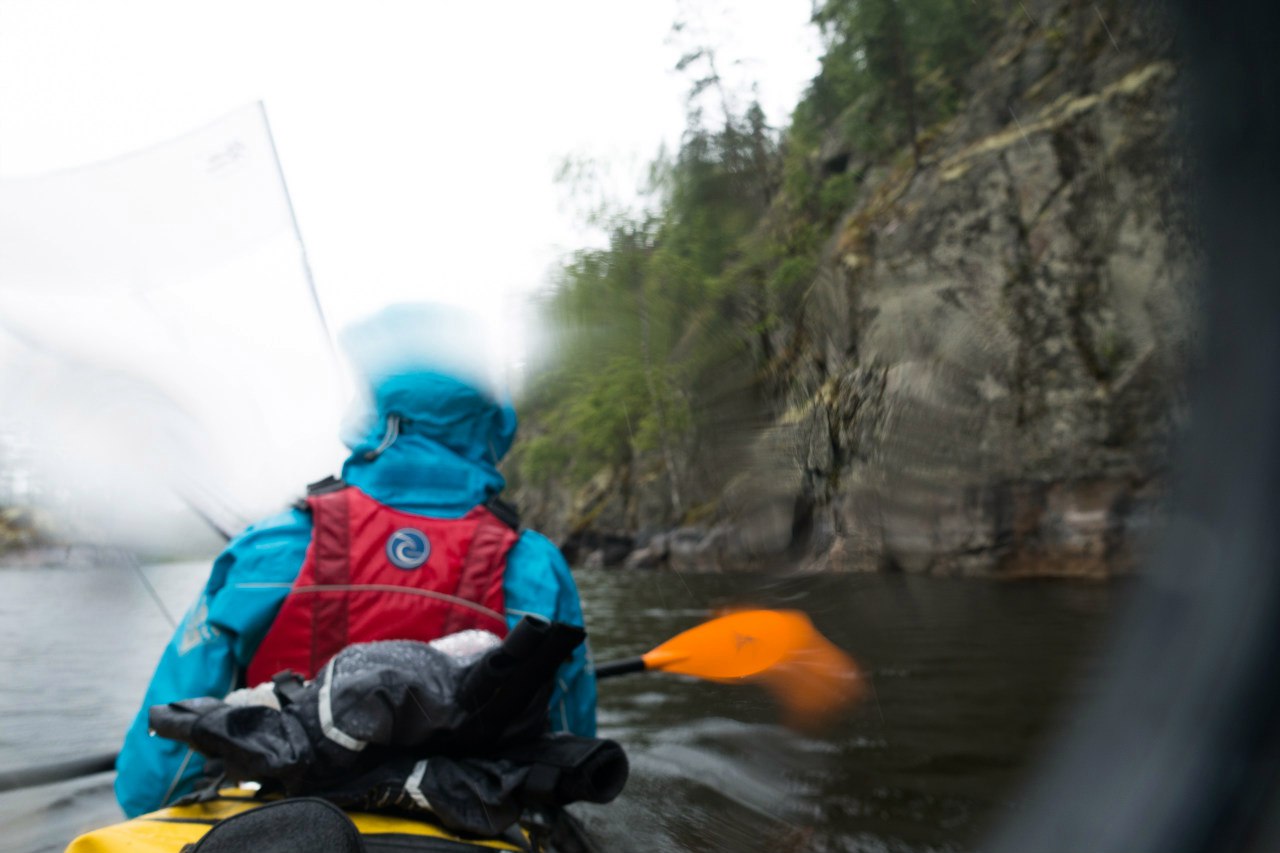
The density of seawater is higher than fresh water, and at equal wind strength a sea wave is longer and lower than a lake wave. Ladoga shows its might, driving waves into our little bay. The sky had clouded over the evening before, and it rained in the night. Everything around is wet, so there's no point lingering at the campsite. We head out into a light surf. The guys from the camp with the catamaran watch us as we draw closer and closer to open water. The waves grow taller and more chaotic. At a wind of 5–7 meters per second the sea would be relatively calm, but we land in a real chop, waves striking from all sides, tossing our craft up again and again. The Vektor is stiffer than the "Ladoga," and it withstands the test stoically, but we don't much like it, and we decide there's nothing for us to do on open water. We turn around, set the sail downwind, and are immediately carried off at 10–12 kilometers per hour. The clear section of the sail cracked and tore — apparently there was a crease there. Later we'll patch it with waterproof tape.
The speed is a little uncomfortable, and on top of that the Vektor's stern is longer, and on the smallest waves the rudder lifts out of the water, so I have to work constantly. We take down the sail; even without it we're carried along at 7–8 km/h. We dive into the skerries — out on the open water some kind of madness is going on.
In the skerries it's a completely different world. Sheer cliffs and low shores. Every island is plastered with fishermen in motorboats. Here and there are tent camps of 10 or more tents. Quiet waters, the wind again blowing from all directions, but not slowing our progress much. At a short stop we find mushrooms. On the map we find a narrow, long strait with an unpronounceable name and move through the labyrinth of skerries toward it. Our path to it was blocked by a small strip of land — apparently at high water you can get through here. But right now there are two rental kayaks sitting here. Nearby we find their owners, who are just breaking camp.
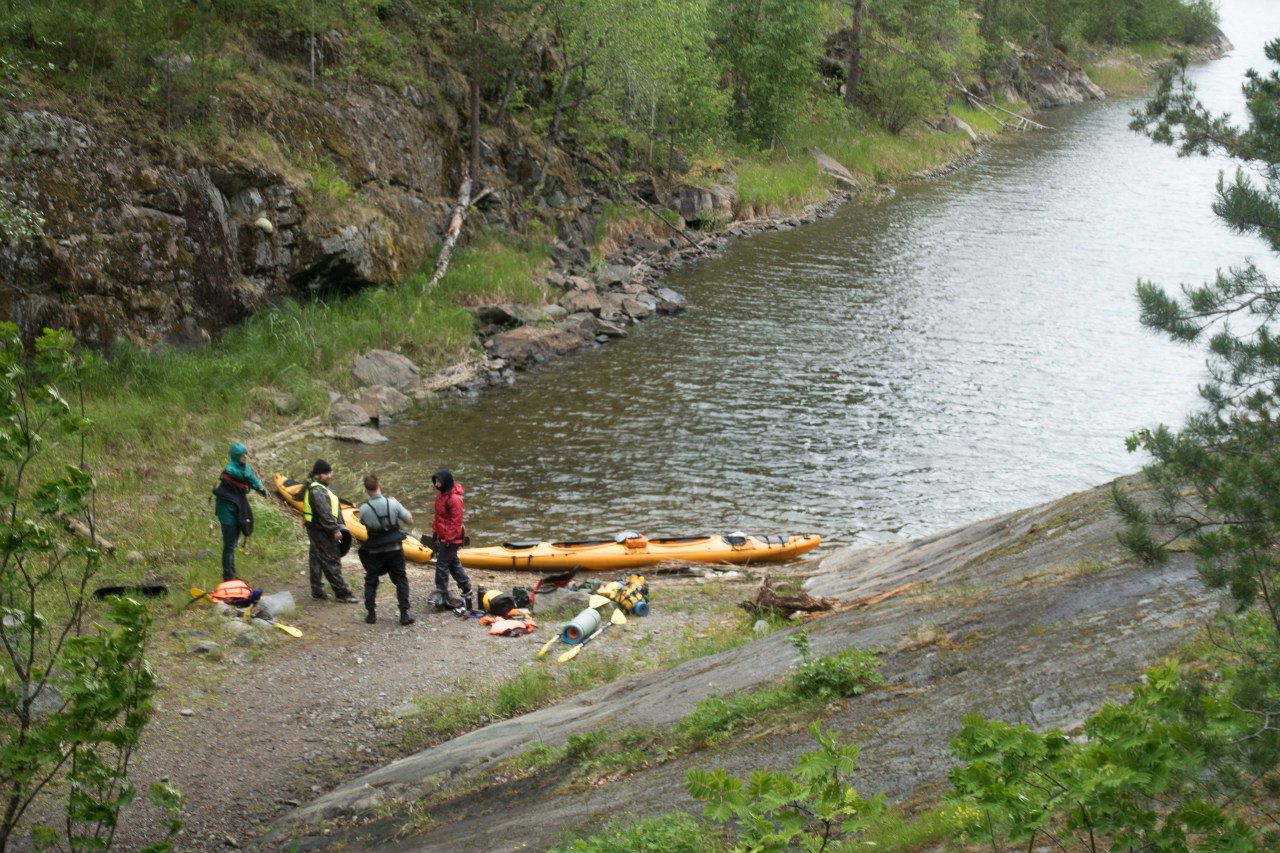
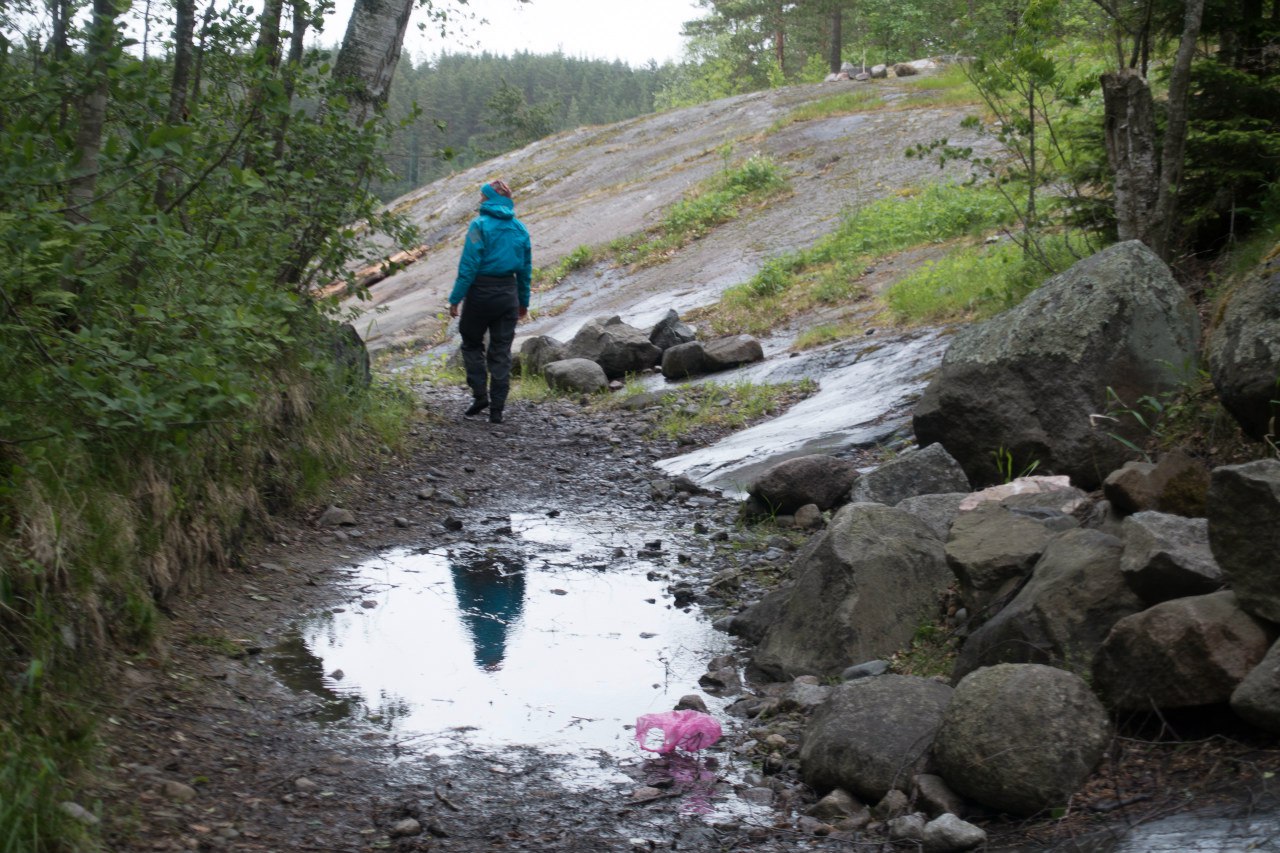
It's just the right time for lunch, and we join the group, discussing our plans. We feel a little sorry for the guys, dressed in ordinary rain jackets. It turns out there's a kayak rental in Tervu. It starts to rain again, the wind doesn't let up, and we decide not to go back out onto the big water today, but to take the skerries to Tervu or Vyatikkya.
In the strait we meet crowds of kayakers. We're going under sail, while all they can do is envy us and paddle toward us against the wind. Unhurriedly we paddle out past the island and turn north, toward Tervu. Now the wind blows in our faces. The shores are plastered with kayakers — we've never seen so many in one place.
Fighting through strong gusts of headwind, we reached Tervu, and the first thing I did was take a dip in the cold Ladoga water. We pulled in bow-first to the shore, and I didn't check what was under the stern. Just two meters from shore there turned out to be about three meters of water under the stern, so I got to test the waterproofness of my suit in practice. A little water poured in through the unzipped neck, and my hat got wet, but otherwise all was fine.
After that we spent a long time looking for that kayak base, or a place to stay the night. We wanted to dry off and warm up. In our search we reached Vyatikkya, a recreation base of the Severny Zavod. Mikhail Vasilyevich, the local manager, informed us that all the cabins were taken and you couldn't pitch tents. There's no phone signal either, and we don't really understand what to do.
In the end I find a two-by-two-meter square where the phone gets reception and decide to order a taxi straight to Piter. My cold had only gotten worse, my backside ached from the Triton seats, the weather wasn't improving, and I'd rather spend the time in a warm hotel room. After lengthy explanations, a taxi sets out for us from Priozersk. Meanwhile we pack up, trying to dry at least something in the wind. We finished packing right as the car pulled up. The driver, Oleg, wandered around for ages looking for us — there's no signal in almost all of Vyatikkya. People really do live here, of course.
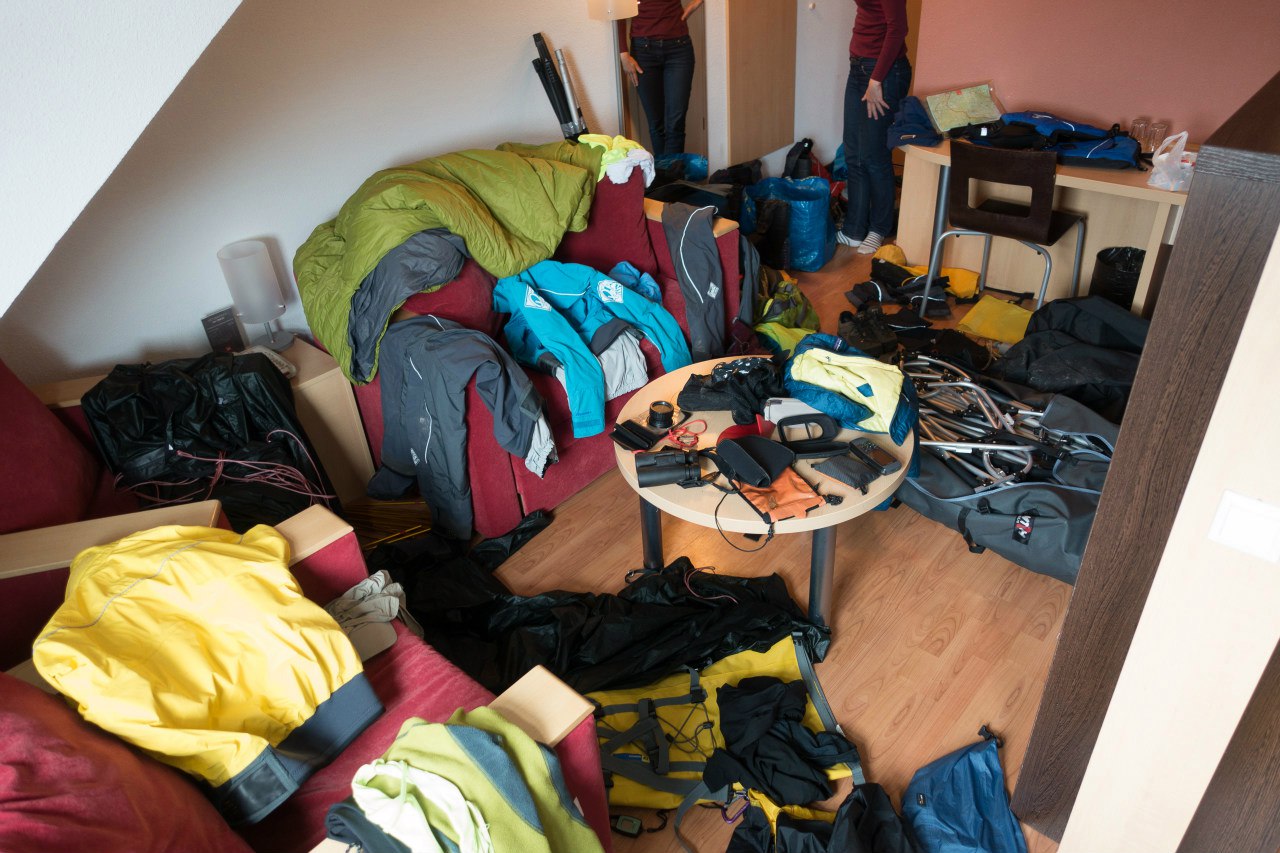
At midnight we're already in Piter, at the IBIS hotel near the station. We spread out our things to dry and go to sleep. By the way, the Ibis has excellent service and breakfast (not included in the room price). The downside — high toilets that are uncomfortable to sit on. Otherwise a very good place.
Piter
Day 4Saint Petersburg
Piter is lovely, despite my dreadful runny nose and a light rain. We walk around the city, drink coffee, go to the movies for Future Shorts.
Approaching Palace Square, we run into Timur Konstantinov by chance and stroll with him around the Peter and Paul Fortress. Then Vova Marchukov shows up and we walk along some backstreets and alleys almost as far as Yelagin Island. We have dinner, Vova helps us load onto the train, and we head home.

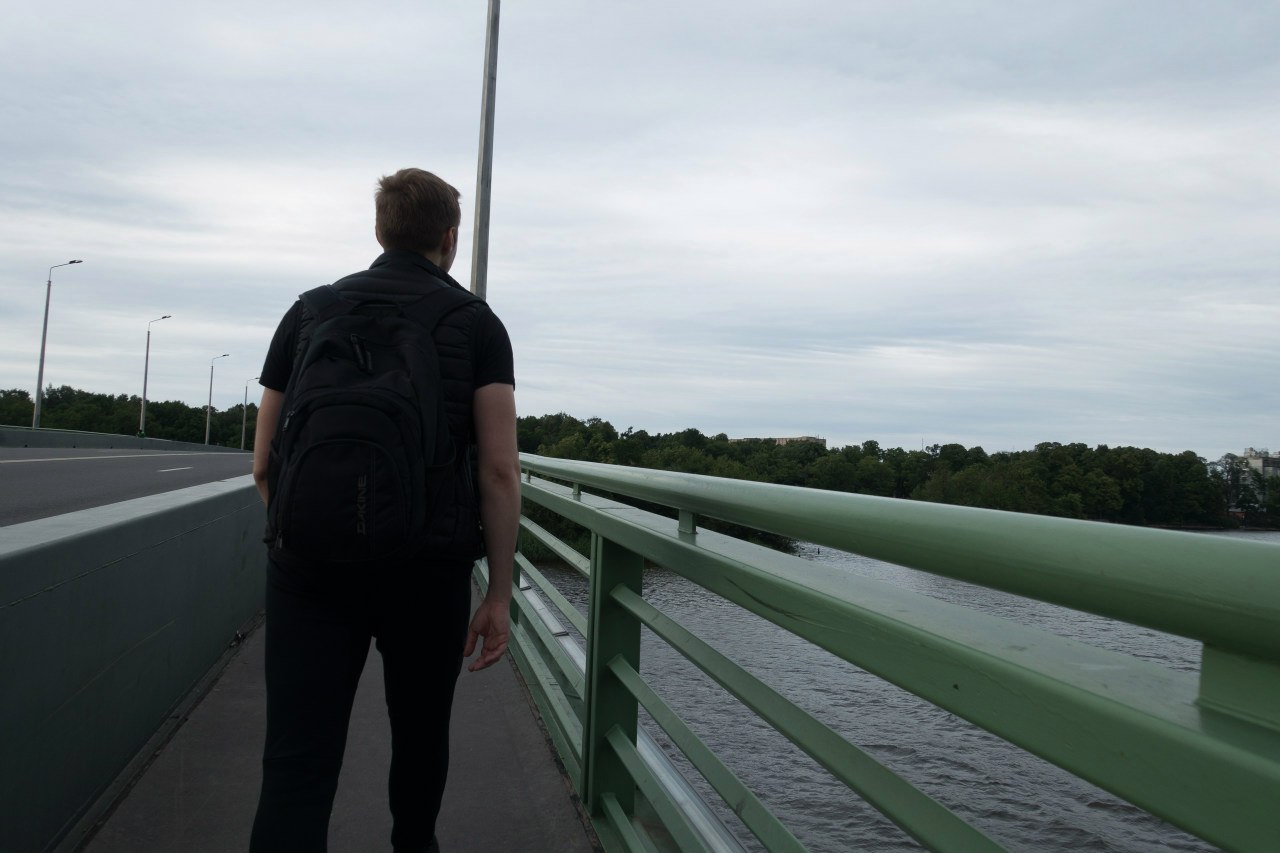
For some reason even on premium trains the ventilation is terrible, and we again have to ride in awful stuffiness. There's no energy to argue with the conductor, who closed the bio-toilet "for safety" during the stop in Piter.
Conclusions
We finally made it to Ladoga. A most beautiful lake, one you want to return to like the White Sea, to explore its other parts. The skerries are a magical place, and I'm glad the bad weather forced us into them.
We could have covered much more distance — for instance, we could have slept in and set off earlier on the first day, not finished at 4 p.m. on the second day, and paddled the whole third day. But why? 🙂
I'll chalk up as a minus my insufficient planning of the route and the exit options — I didn't study the roads and villages at all, nor did I check the mobile-operator signal strength on Open Signal. Because of this lack of planning, we spent a bit of time going in circles in the skerries.
Gear
In terms of new gear we had the Vektor-2 and a waterproof case for the camera.
The waterproof case from the Korean company DiCaPac (Digital Camera Pack) performed decently overall, but you have to get used to it, plus a wet lens sometimes produces interesting artistic effects. Still, it's better than a PeliCase, into which moisture got after just a couple of openings and closings in the rain.
We took the same sleeping bag as in Crimea — Splav Double 120. It proved itself superbly, and in the cramped "Vektor" our two Marmots would barely have fit. The sleeping bag's only problem is that on our inflatable mats, which narrow toward the bottom, your feet rest right on the ground between the mats. In the morning the bottom of the bag is a bit damp, but since it's Primaloft, you don't feel the dampness.
The Vektor, though, is a slightly more contradictory purchase. You can see they worked on the feedback and made a lot of great innovations. At the same time, a lot of new structural "features."
Pros:
- It's much more convenient to assemble and disassemble. You can put it together solo;
- The construction is much stiffer, I felt far more confident;
- It's more comfortable for the captain to position their feet (it's hard to describe, but on the Ladoga it's uncomfortable to brace against the keelson frame, whereas here it's comfortable);
- A normal cockpit size, you can buy a good membrane spray skirt;
- The included spray skirts with a pocket are the height of convenience;
- The "shirts" are a good solution for protecting the rudder cables;
- A large stern — you can fit a couple of dry bags if you want;
- Great hatches, the design is very sound;
- Cool black color;
Cons — general
- Little space inside, and you have to pack with smaller dry bags. On the whole this is a matter of skill;
- The kayak keeps trying to turn its starboard side to the wind and you have to steer against it constantly. Possibly also a matter of skill;
- The new frame-mounting system is, on one hand, better than the plastic fasteners, but on the other you have to set them very evenly;
- The manual is straight out of the '80s, missing a description of how to adjust the steering and how to fold the skin back into its bag;
- That same backside-violating seat. It's a f***ing disaster, come on, invent something you can actually sit on. We'll swap it for dry bags with sleeping bags.
Cons — structural
- General couldn't-care-less attitude in making the product. The skin fits well, but with some wrinkles. The glue is applied unevenly, parts are glued together crookedly. Sloppy seams;
- I get the feeling the fabric here is thinner than on the Ladoga;
- The rudder is just garbage — when assembled, its beam was rotated by 10–15 degrees, and I had to work it with a hammer;
- The rudder blade has wild play and for some reason sticks out at an angle, barely dipping into the water. At even a small wave it already comes out of the water. This isn't a rudder, it's a parody of one. I'll definitely be redoing it;
- The rudder's mounting point is very soft, and if you pull the steering cables hard, the rudder lifts even more out of the water;
- The steering bar BENT. I hope the stringers aren't made of the same crap;
- The thigh braces aren't adjustable, and it's frankly unclear whose thighs they're designed for. Neither I nor Dasha managed to use them. Their only plus is that they add stiffness to the construction.
WHAT???
I'd shove Triton's quality-control department's face into what they put up for sale. I hope this sloppiness is confined to the appearance and not the construction — I don't want the kayak to fall apart in the middle of the sea. In general I do love Triton for what they make, but they're badly stuck in the Soviet era, and you just need to give everyone there a good kick up the backside, from the fitters to the CEO, so they wake up and realize that in 2016 you ought to ship a product and stand behind it.
Although, with no competitors on the market, they don't really need to — people will buy it anyway.