An Iranian Journey
We had no plans whatsoever for this New Year, so we improvised. Having heard by chance that Taya and her friends were going to Georgia, we remembered that we'd wanted to do a Caucasus trip. Georgia, Armenia, Azerbaijan, Turkey — that was the rough plan for our dream journey. But the dream wasn't meant to come true, at least not fully.
At the planning stage we ran into Armenia's difficult relationships with Turkey and Azerbaijan, and the logistics of the "dream journey" were turning into a nightmare of constantly having to return to Georgia. And that's when Dasha remembered Iran. Iran had caught my attention after I met Vanya Ryskal at YCamp. He told such fascinating stories about the Middle East that I started reproaching myself for my complete ignorance of, and even indifference to, the region. So we kept 3 days in Georgia and set aside the rest of Dasha's vacation for Iran.
–We're flying to Iran! –To ISIS or what?
That's how I would have answered myself half a year earlier. Now we'd learned a lot of new things about Iran. Well, besides the fact that somewhere out there in the desert they have a nuclear power plant. We arranged visas with the help of the goiran.ru website (as of 2016 you don't need a visa at all), booked hotels through it, and put together a rough plan: Tehran – Isfahan – Shiraz. It's clear now that we should have given Iran all 2 weeks, or better yet 3.
There are no direct flights to Tehran from either Moscow or Tbilisi, all of them connect through Baku. We picked connections that would let us spend half a day in the city on the way there and almost a full day on the way back. The overall plan was this: Georgia – Azerbaijan – Iran – Azerbaijan. Well, seeing three countries in one trip — that's something we love.
This part of the story isn't about Iran, so feel free to scroll on.
Dec 29Tbilisi, arrival
At passport control in Russia they questioned us at length about why we were flying to Iran, and whether we planned to visit neighboring countries like Syria or Afghanistan. Our plans mostly involved relaxing and sightseeing, so our answers broadly satisfied the airport staff, but we did have to show them our hotel bookings. Georgian customs control, meanwhile, was handing out little bottles of saperavi to everyone — for some reason except us — but that beats interrogations. Georgia greeted us with the smell of tobacco smoke. You can smoke everywhere, and people happily take advantage of it. We bought a SIM from the local Beeline, haggled over a taxi, and headed to our Silver Hotel (really the last Bed and Breakfast we'd managed to grab for a reasonable price in the city center).
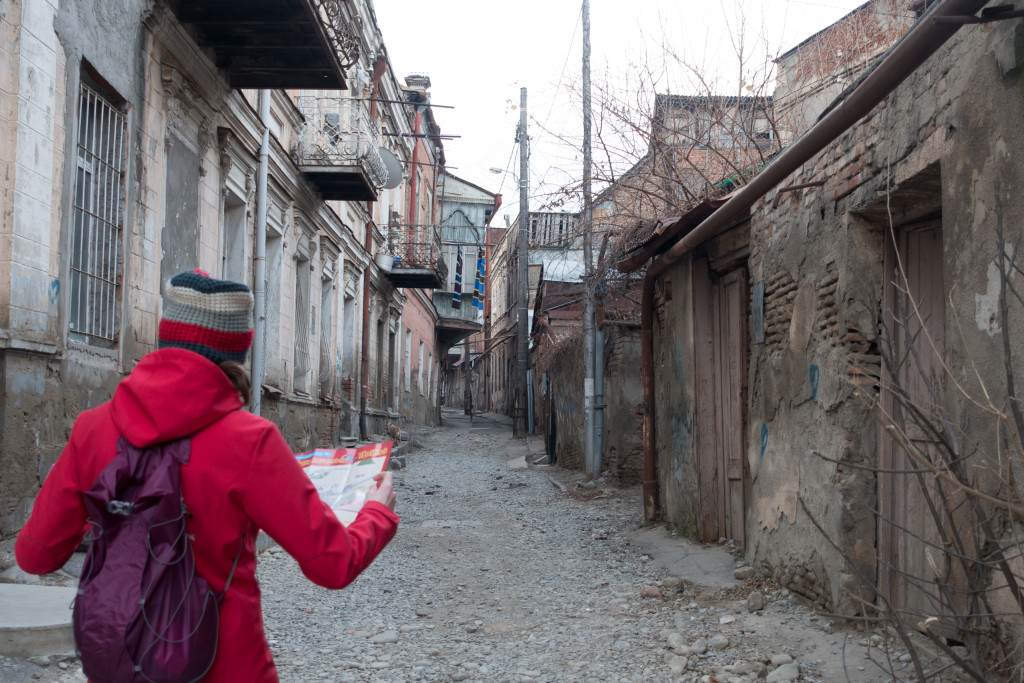
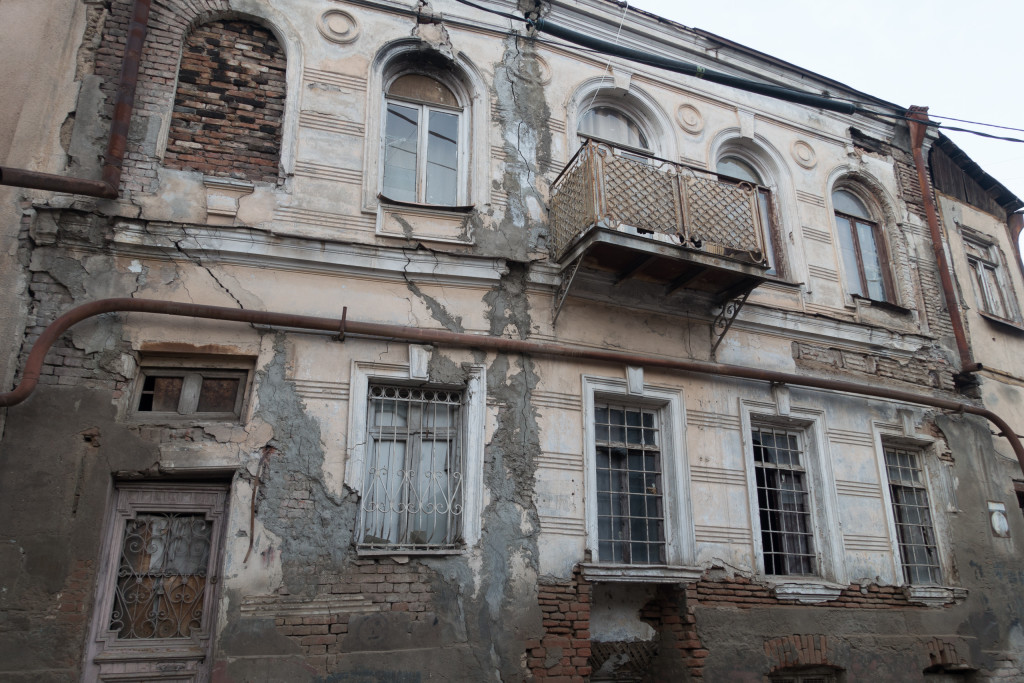
The Silver Hotel sits a couple of hundred meters from Freedom Square, in the very heart of the Old Town. Sounds great, but it looks like a little village after a bombing. The old town is a pitiful sight — the part that hasn't been bought up by private businesses (with expensive restaurants and hotels) hasn't seen major renovation in a hundred years, maybe more.
We were quite surprised to see that people live in these crooked, nearly ruined houses. Stepping out of the old town is like a portal to another dimension.
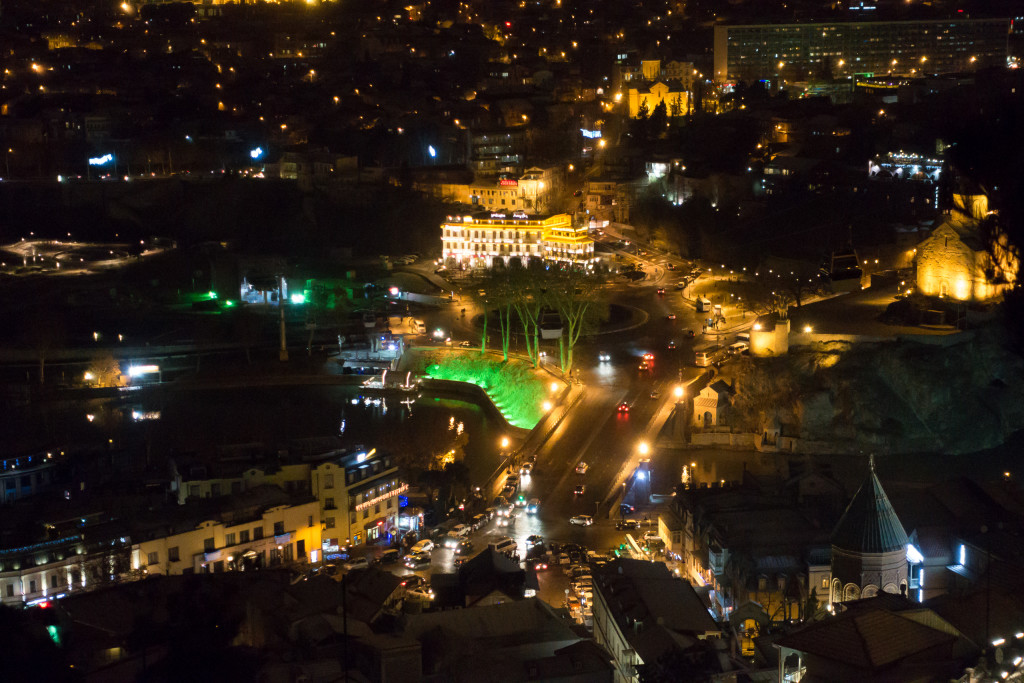
We wandered around the city, rode the funicular up to the Mother of Georgia monument, and had dinner on Rustaveli Avenue at a decent little place called "Shkhara." There we got acquainted with the incredibly enormous Georgian food portions. How much they eat here! And I mean really gorge — and the main thing is it's all delicious and you want more. We never once managed to eat normally again; every Georgian lunch or dinner turned into a feast. The festive atmosphere, and Georgian color itself, only encouraged it.
Dec 30Tbilisi
We devoted the whole day to endless walking. All the museums closed at one o'clock and we simply didn't make it, so we put that off until the 31st.
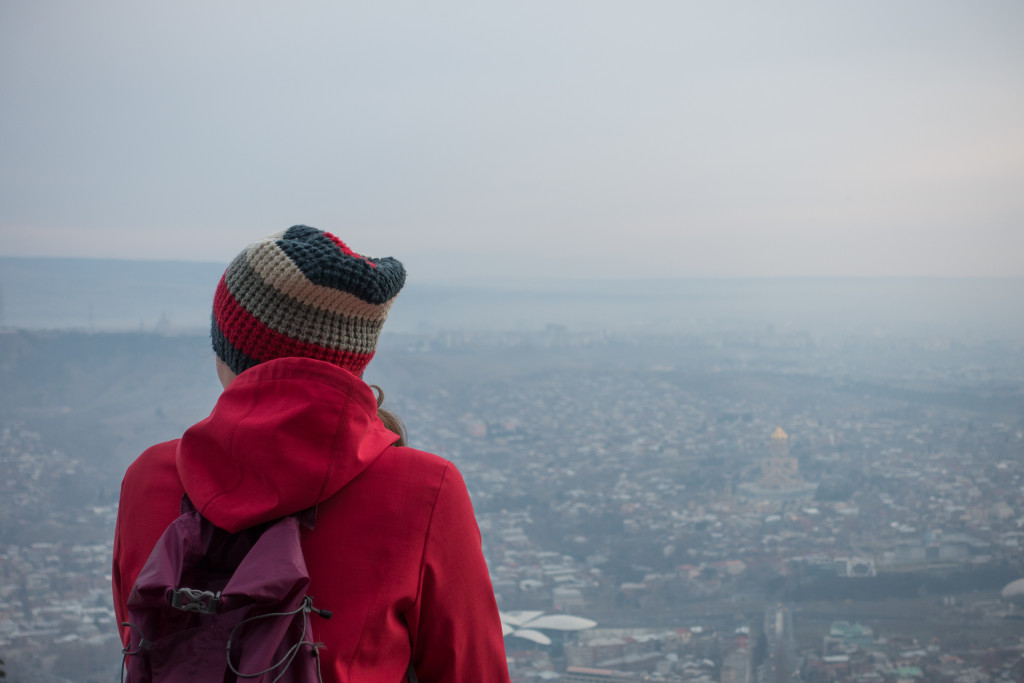
We took the funicular up to Mtatsminda Park, looked at the idle Ferris wheel (it opens at one in the afternoon, I think), and walked along a well-maintained mountain trail to the overlook by the Mother of Georgia, about an hour and a half on foot in all. This route, like many others on our trip, was suggested to us by the maps.me offline maps. Their navigation is so-so, but you can learn a lot when there's no internet. Although we did have internet, and we were swapping photos with Taya — they were just finishing their tour of the surrounding towns and villages.
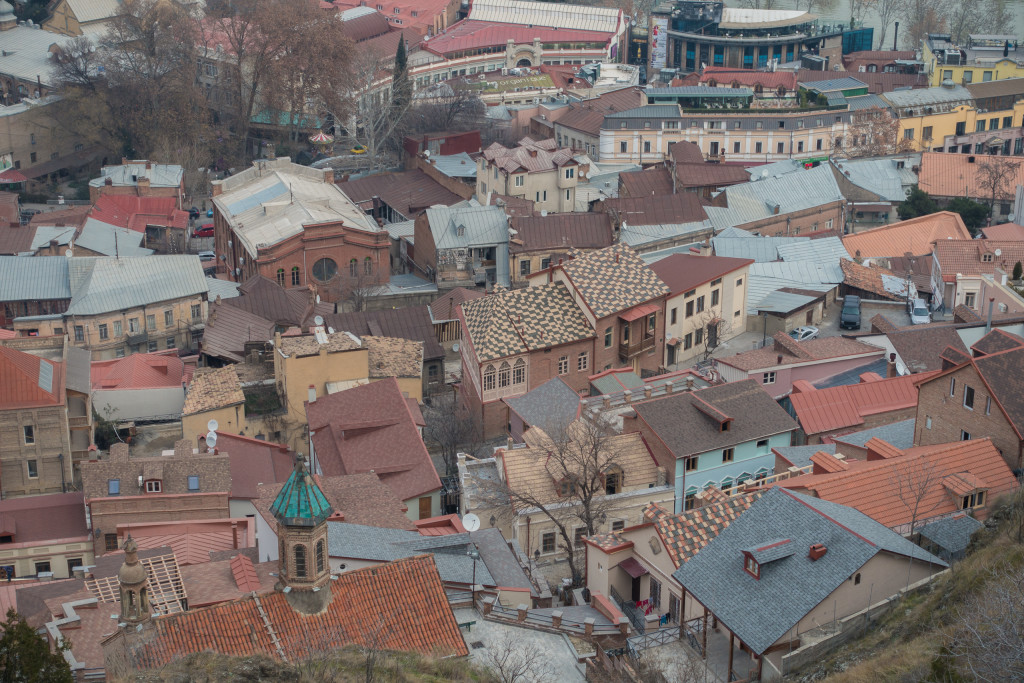
The weather was pleasant, the temperature a few degrees above zero, mountains all around. Beautiful. After coming down, we booked a private room at the sulfur baths Tbilisi is so famous for. Both "Tbilisi" and the city's Greek name, Tiflis, refer to them. It turned out to be a room that comfortably fit eight people, with a large anteroom and a pool of hot, sulfur-smelling water. You get used to the smell quickly, and we even regretted booking only an hour (it cost us 80 lari, about 30 dollars). The room also had a sauna, but it's apparently there as a nod to fashion. Water at 39–40 degrees makes the body sweat no worse than an 80-degree steam room.
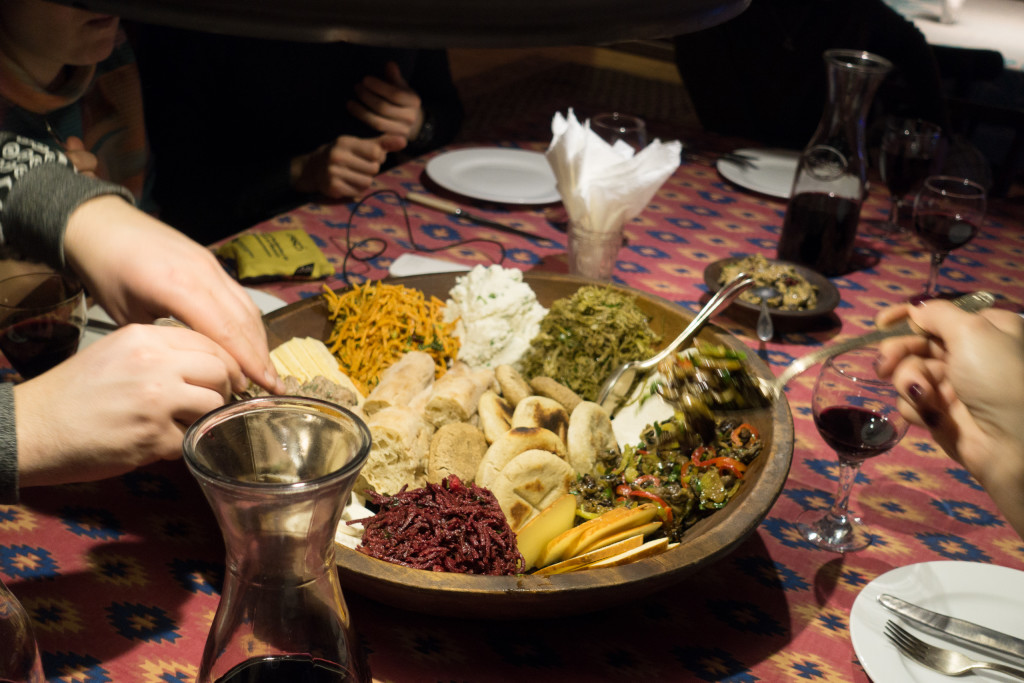
After the baths we met Taya and her friends at the "Black Lion" restaurant. There another cheerful feast awaited us, with new gastronomic discoveries. It's not a cheap place by Tbilisi standards (by Moscow standards it's "okay"), but the food is very good and the service is great. By the second day we were already getting tired of the perpetually smoke-filled cafés and restaurants, and Dunkin' Donuts seemed like an excellent option purely because no one smokes inside.
Dec 31Tbilisi, New Year
On Freedom Square they're still working on setting up a stage. There's something of the Soviet legacy in it — the legacy the country's leadership is trying by hook or by crook to disavow. The city is slowly getting ready for the celebration; all it's missing is snow.
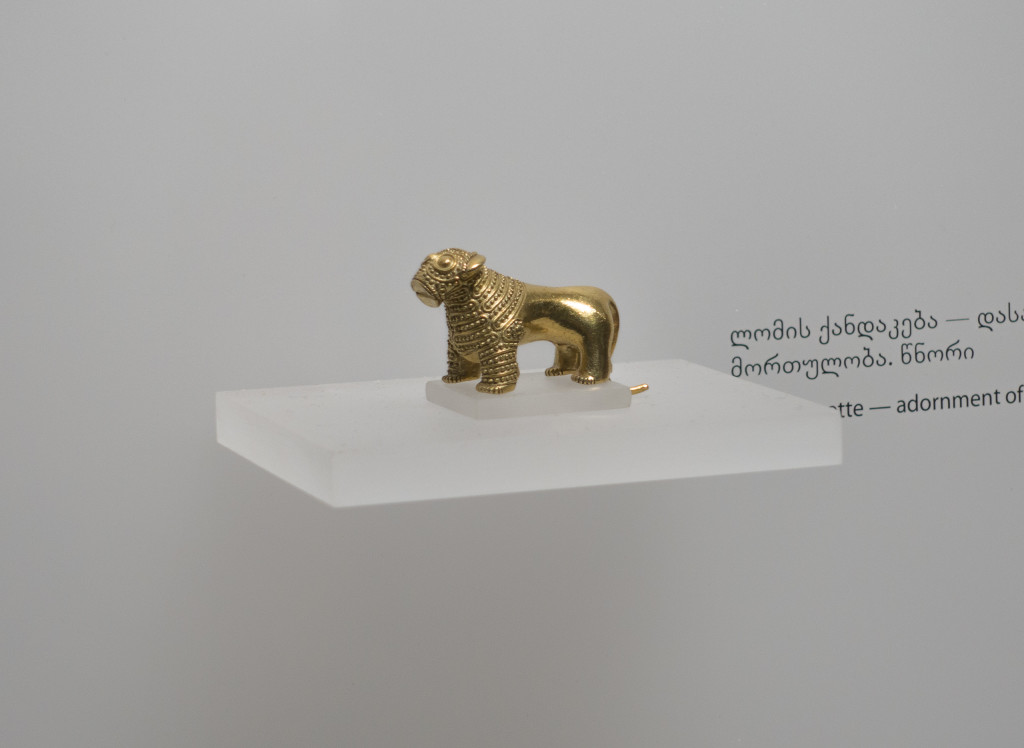 The first thing we did was visit the National Museum, learn about the history of the Soviet occupation, watch a propaganda clip about the events of 2008, but above all of course — take in the museum's main exhibition, which tells of ancient Georgia as a center of gold jewelry production, Colchis. Magnificent figurines, diadems, and earrings — true works of art.
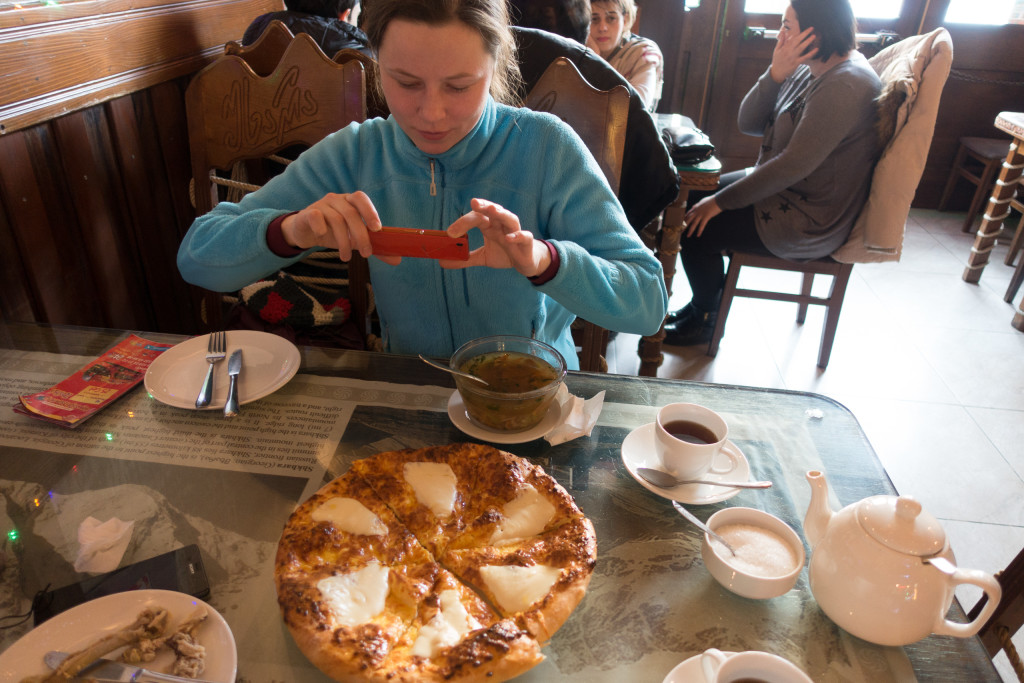 Our second goal was the second funicular in the western part of the city. After a hearty lunch at Shkhara on enormous buckets of soup and a giant khachapuri, part of which we had to take with us, we set off on a tricky journey. It was tricky because on the bus-stop display board our routes kept getting pushed further down, and after 15 minutes we gave up waiting and took the metro. The outlying parts of Tbilisi already look nothing like the tourist center. Around every metro station a spontaneous market springs up, where locals sell traditional Georgian "Christmas trees" — actually hazel branches, whittled to look like little trees.
You can also buy meat, fresh and not so fresh, churchkhela, wine, and generally everything a Georgian needs to celebrate the New Year. New Year is a family holiday for them, so everyone tries to gather together, and the festivities don't begin until well after midnight.
Our second goal was the second funicular in the western part of the city. After a hearty lunch at Shkhara on enormous buckets of soup and a giant khachapuri, part of which we had to take with us, we set off on a tricky journey. It was tricky because on the bus-stop display board our routes kept getting pushed further down, and after 15 minutes we gave up waiting and took the metro. The outlying parts of Tbilisi already look nothing like the tourist center. Around every metro station a spontaneous market springs up, where locals sell traditional Georgian "Christmas trees" — actually hazel branches, whittled to look like little trees.
You can also buy meat, fresh and not so fresh, churchkhela, wine, and generally everything a Georgian needs to celebrate the New Year. New Year is a family holiday for them, so everyone tries to gather together, and the festivities don't begin until well after midnight.
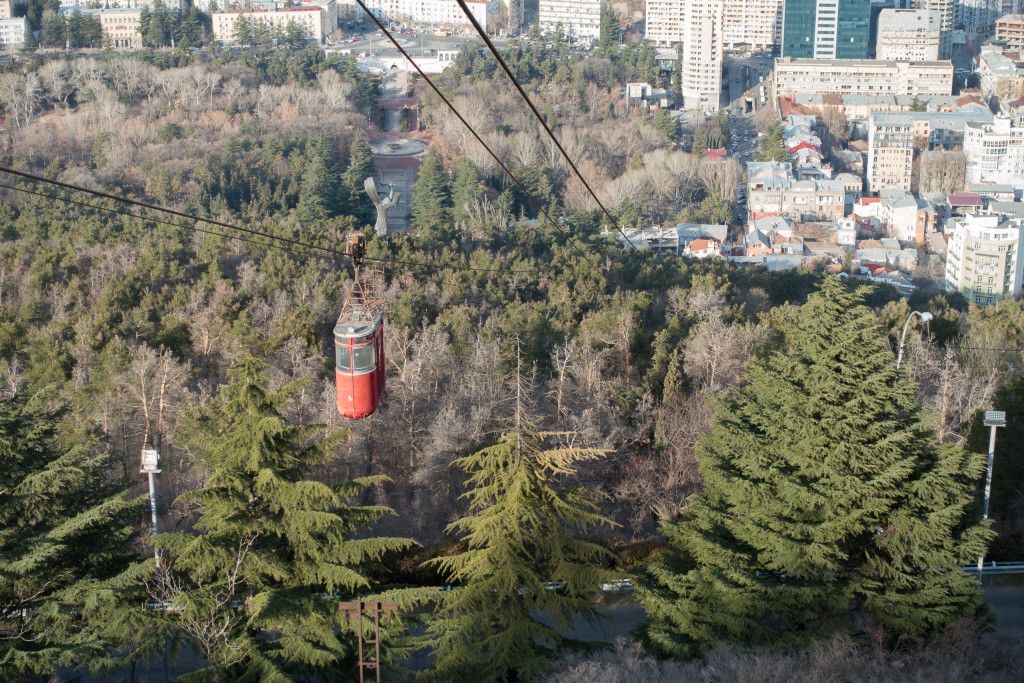
When we reached the funicular, we realized that trusting the maps had played a cruel trick on us — the funicular was there, the cabins hung from the cables, but it hadn't been used since the '90s, maybe the '80s. We had to walk to the ethnographic museum, a park to which old buildings have been brought from all parts of Georgia. We'd already been to a place like this, the Skansen museum in Stockholm, and we loved it. Forty minutes of walking uphill brought sad news — the park had closed at one o'clock and had no intention of opening for two tourists who'd wandered in by chance, so we continued our climb. Cars kept driving up; there was clearly somewhere to go. We guessed it was Turtle Lake, and we weren't wrong.
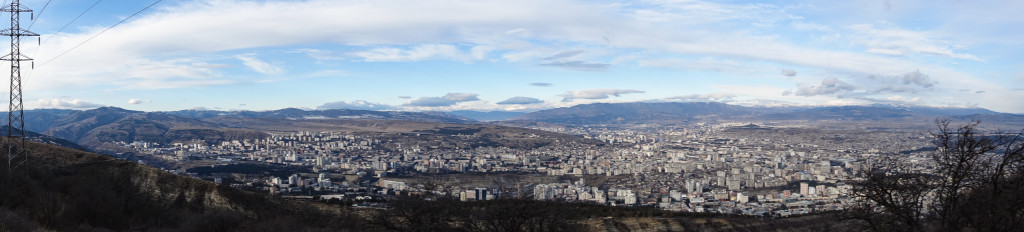
Everyone was going to stroll around the mountain lake. We, meanwhile, found yet another trail on maps.me and decided to walk to Mtatsminda, where our friends happened to be heading. The hike along the mountain trail took almost two hours, and we saw nearly the whole city from the height of the ridge, even climbing higher than the TV tower.
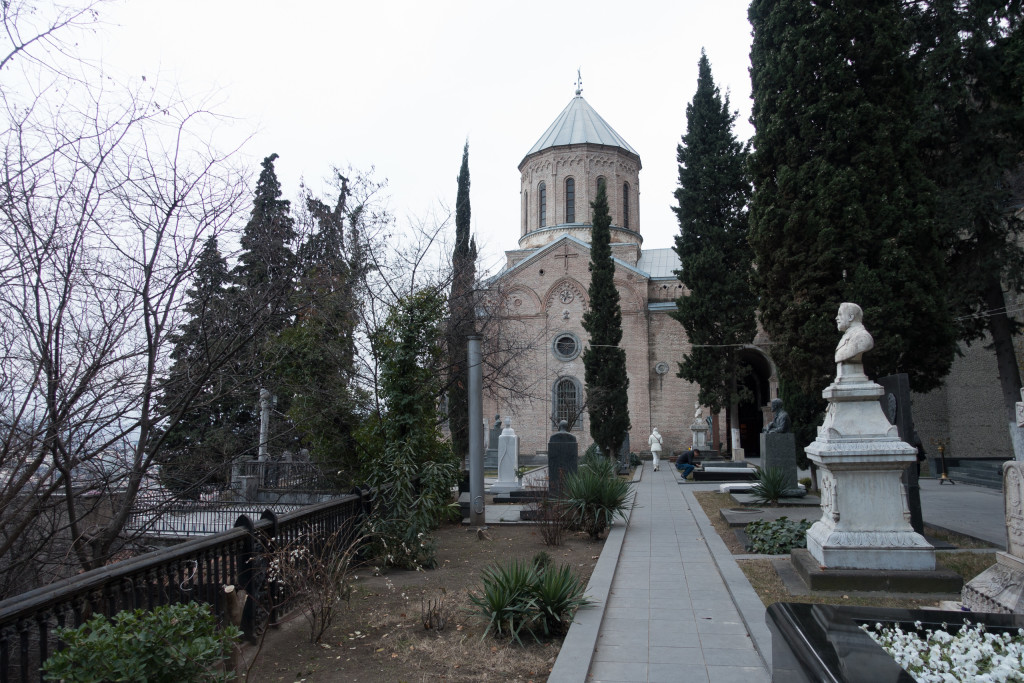
After meeting up with the gang, we rode the funicular to the Mtatsminda monastery, the place where famous Georgian political figures, poets, and others are buried. Griboyedov, killed in Tehran, is buried there too, as is the mother of Joseph Stalin. It's a beautiful spot, with a fine view of the city.
A tour of the graves with a guide who'd been showing the gang around for three days now ended, logically enough, in a restaurant. We had to limber up before the New Year.
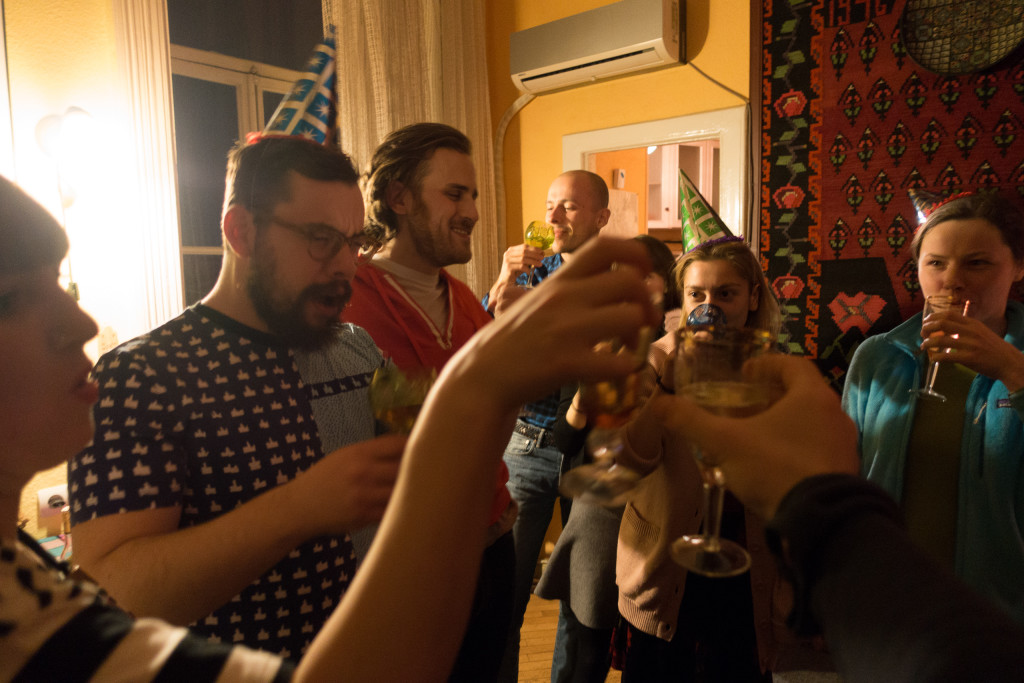
We saw in the New Year itself at an apartment the gang had rented ten minutes from us.
Then we went out walking. Rustaveli Avenue had turned into a theater of war; everyone was throwing firecrackers under each other's feet and firing Roman candles into the air. We don't like long parties, and by three in the morning we'd already gone to bed.
Jan 1Mtskheta
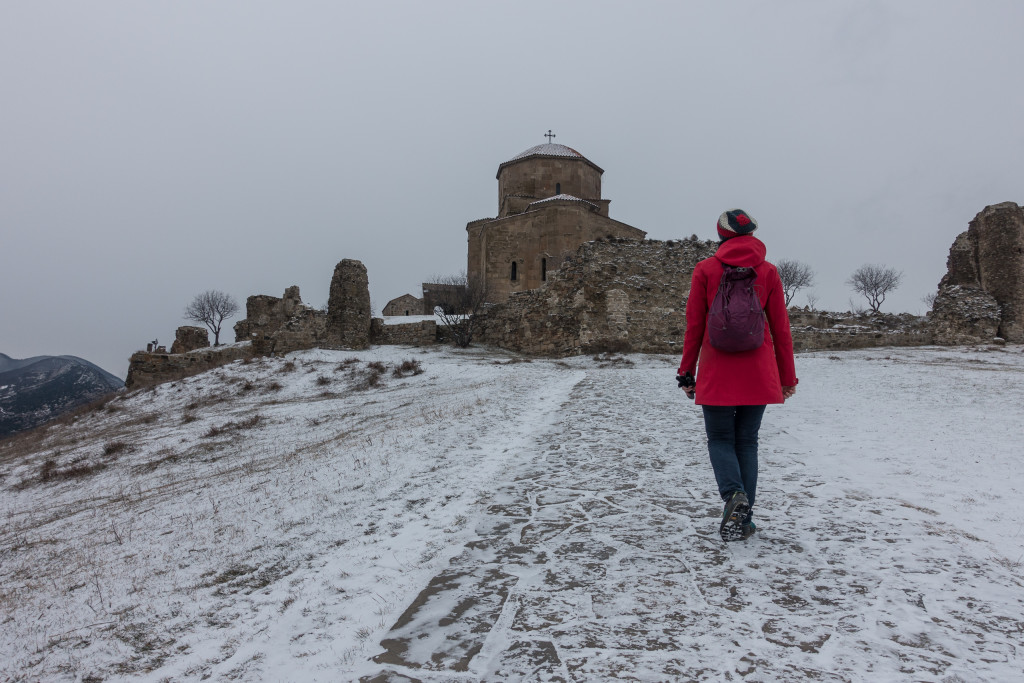
While the gang recovered from the celebration, we went to Mtskheta, the ancient capital of Georgia.
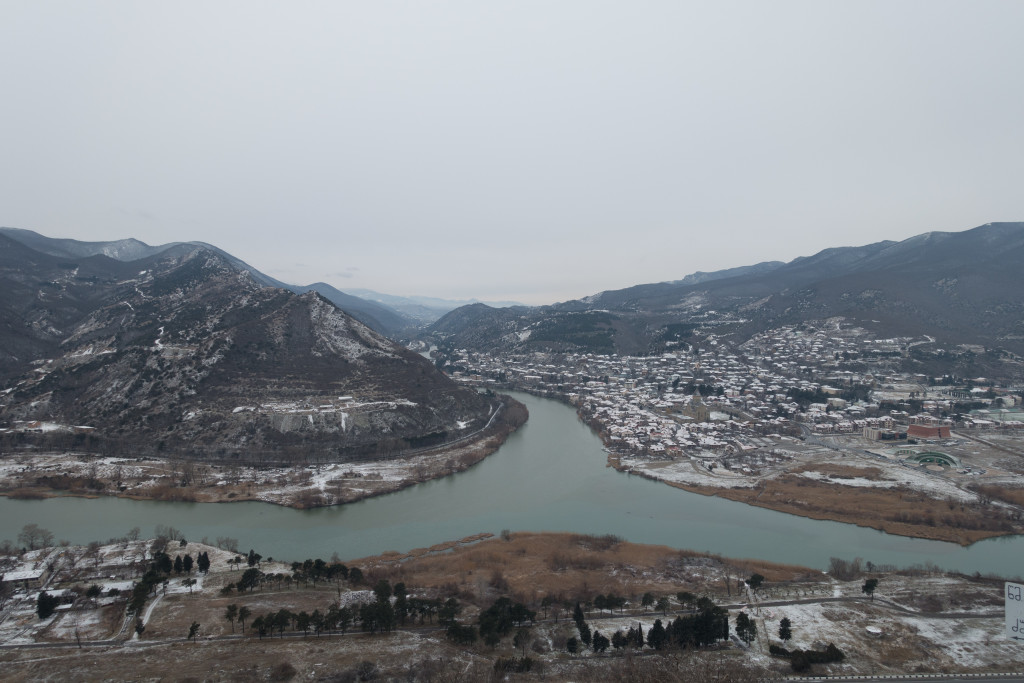
We looked at the ancient monastery set on a hill with a great view of the confluence of the Aragvi and Kura rivers and of Mtskheta itself, where there's nothing else to see besides the monastery — but inside it I found interesting gravestone plaques with examples of the ancient Georgian alphabet.
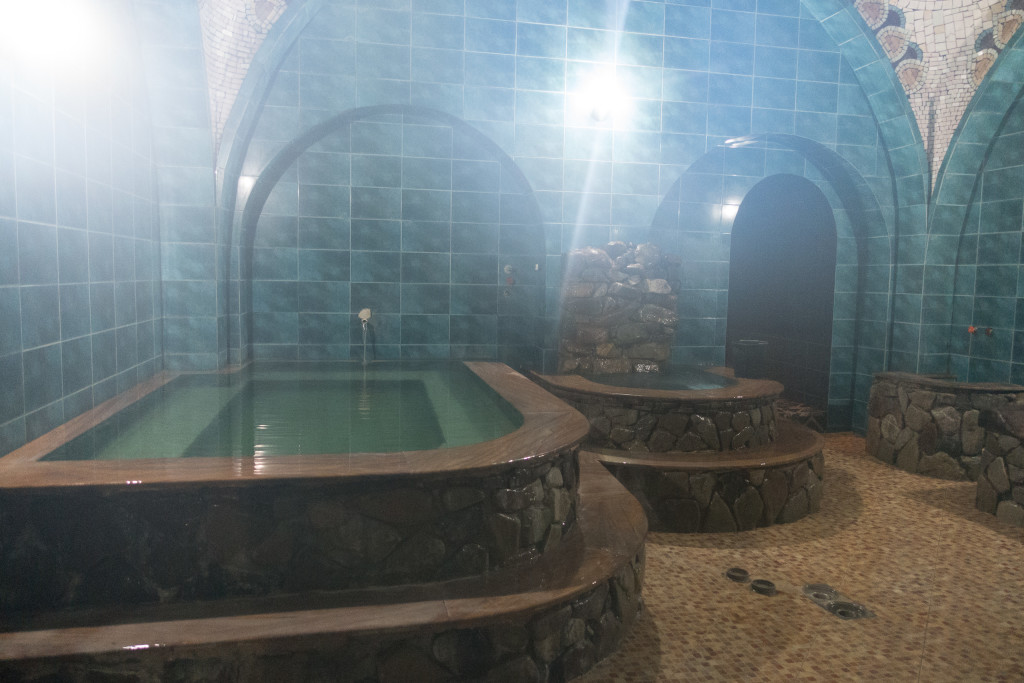
We came back in time for the hungover lunch of the friends who'd stayed in Tbilisi, after which we went off with them to the sulfur baths all over again. This time we rented the largest hall, at 100 lari an hour. We had a great time, watching the girls' jewelry get coated with an amusing film, similar in color to an oil slick.
After the baths we had very little time left, and we spent the remaining lari on our transit card on a ride up and down the funicular, after which we went to the airport. The weather was getting worse, it was snowing and gusty, but the Azerbaijan Airlines plane wasn't delayed. I'd planned to sleep a little during the flight, but the turbulence wouldn't let me indulge in that pleasant pastime. The shaking was really intense, but Dasha said that since we were flying, the avionics must be new and all was well. On arrival at Baku airport, we discovered that almost all flights here had been canceled — only ours had landed. After changing a bit of money into manat and haggling with the few taxi drivers, we drove to the hotel. It was already 4 a.m., and we desperately wanted to sleep. The Holiday Inn was an excellent choice; we stayed there the whole day. While Dasha slept, in the morning I went to the pool, where I swam a kilometer to get back in shape.
Jan 2Baku
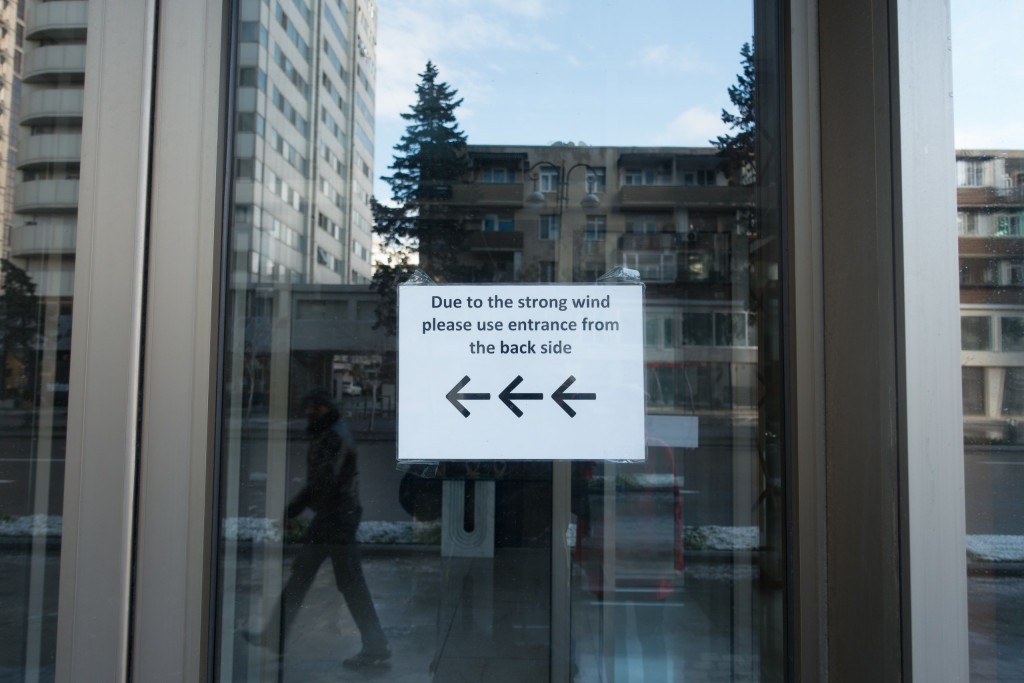
Baku lived up to the name its locals gave it. The "City of Winds" greeted us with a powerful blast of wind as we stepped out of the hotel. That wind blew all day; the locals assured us this was normal.
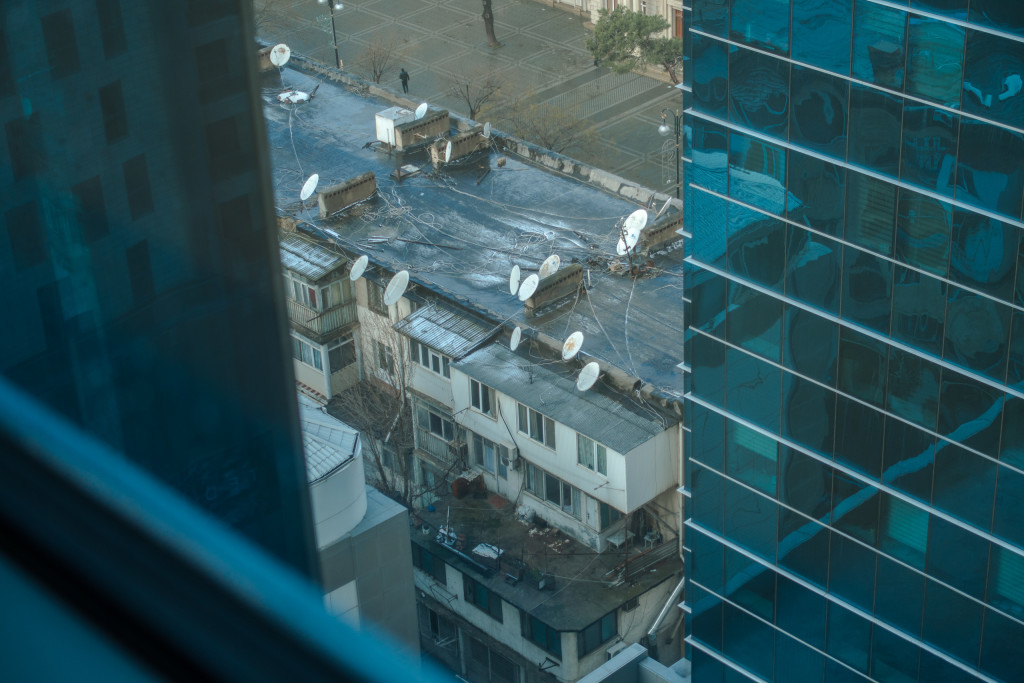
Baku is a city of contrasts. All around are beautiful new high-rises, office buildings, hotels, expensive boutiques, and at the same time, look just behind the façade and there are old houses in rather sad shape.
The promenade along the waterfront is laid out simply magnificently. Wide and beautiful, it's the main place where locals and tourists stroll in the evenings. Azerbaijani swagger is everywhere: there's a greenhouse with baobabs on the promenade.
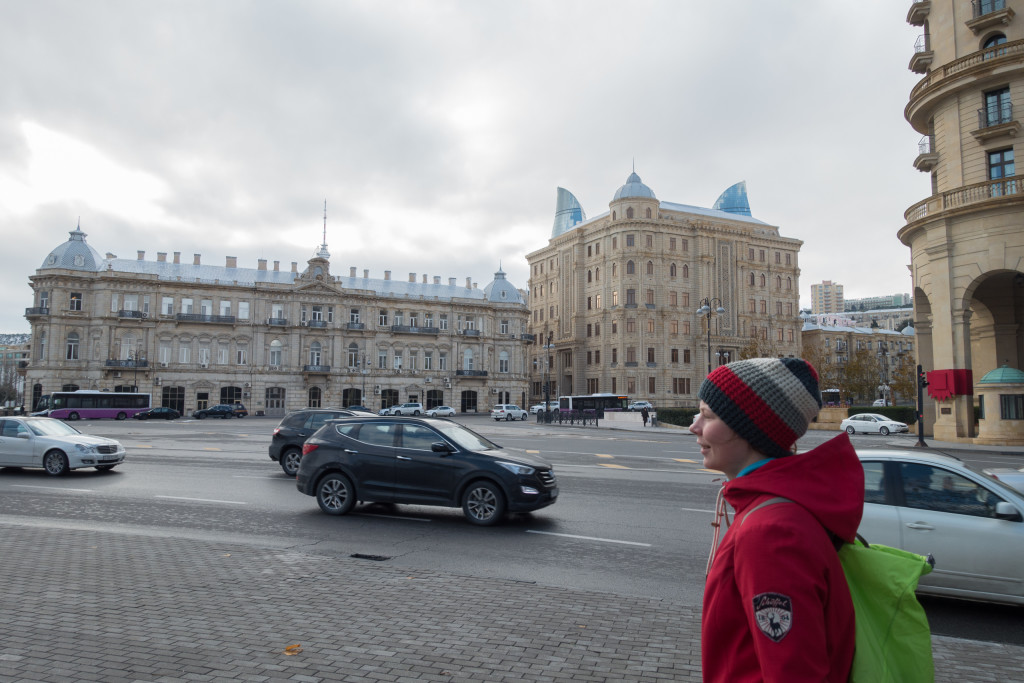
The central part of the city delighted us with its unusual fusion of European architecture, Middle Eastern limestone, and Azerbaijani ostentatious luxury.
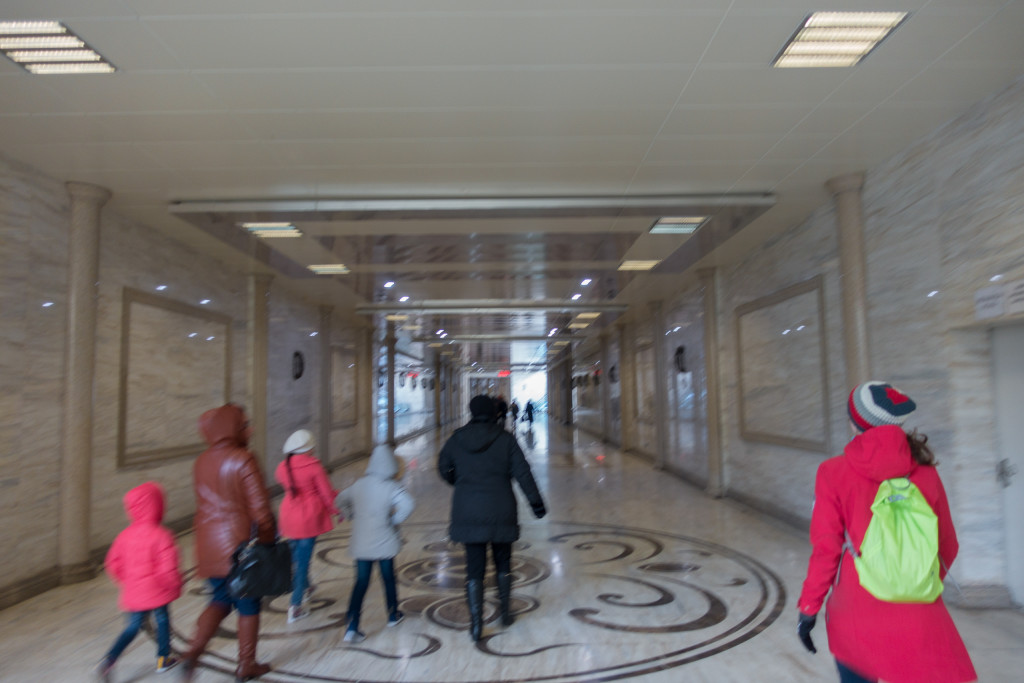
Here, for example, is an underpass.
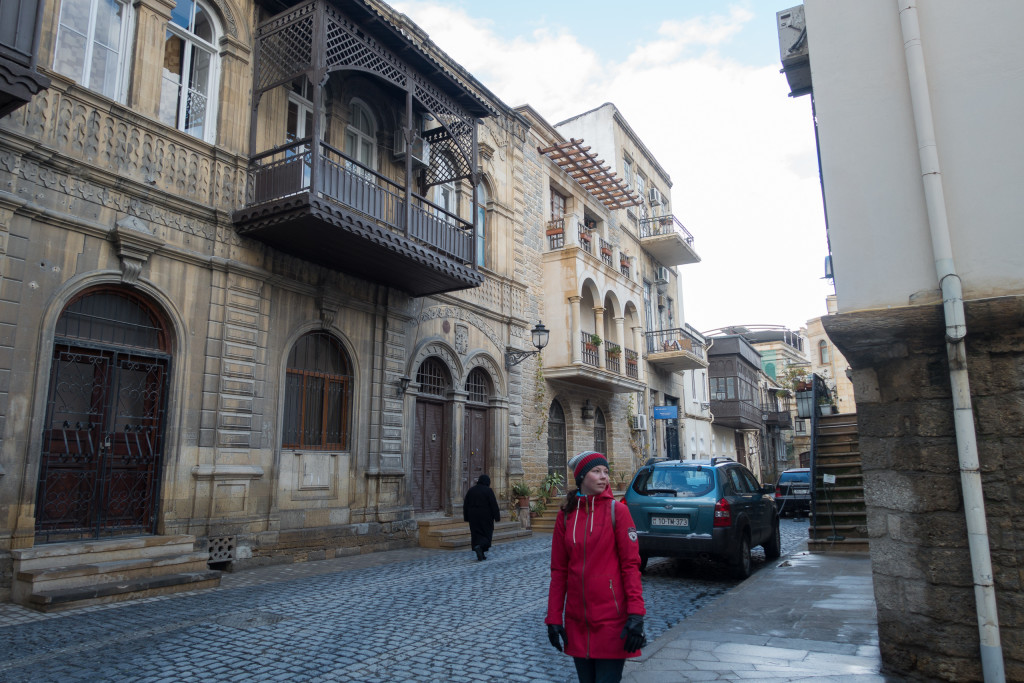
We set off to explore the old town. A very beautiful place. Historic buildings are surrounded by residential houses. All the houses are built, or at least faced, with pleasant yellow limestone — a kind of citywide architectural code.
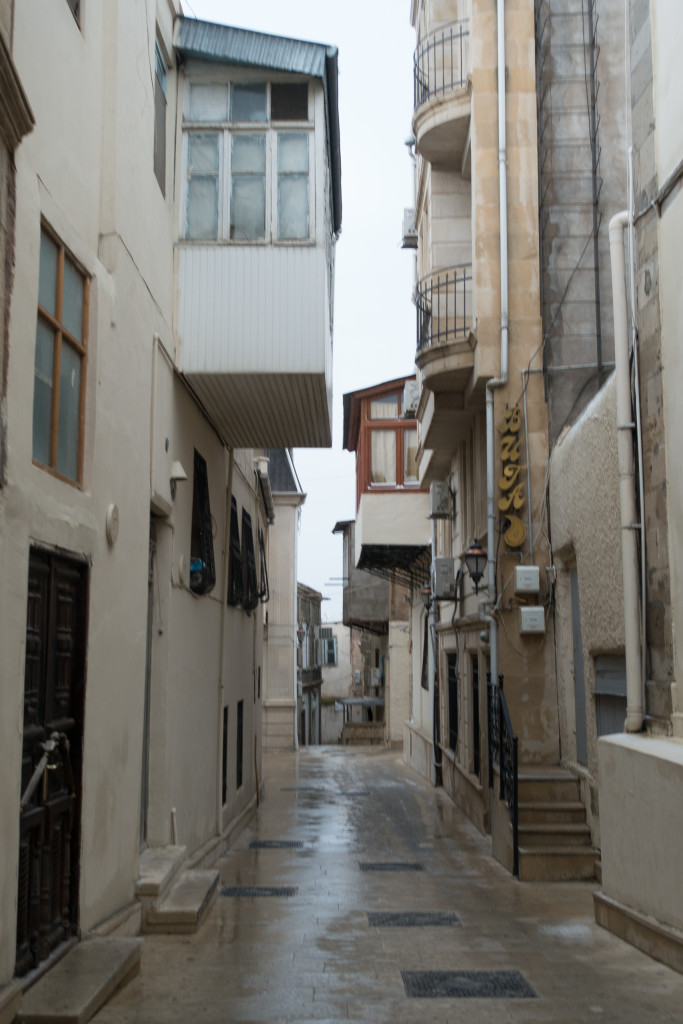
In the alleys of the old town it's easy to get lost, to find a random fruit-and-vegetable shop, to meet locals going about their business, to peek into a courtyard and see laundry drying, and then to emerge from this labyrinth onto a little street full of tourists.
We visited the Maiden Tower and celebrated Dasha's birthday at a little restaurant. Azerbaijani cuisine isn't very different from Georgian, and we were already quite tired of Georgian.
Fatigue began to set in; we walked a bit more, rode the metro, and headed to the hotel to rest before the flight to Tehran.
Jan 3Tehran, Damavand
Evening, we're waiting for the plane at the beautiful Heydar Aliyev airport in Baku, and Semyon Makarov messages me on VK. It turns out he and Tanya, his girlfriend, are right now also waiting for a flight to Tehran, sitting about 20 meters from us.
A great start to the journey. We share our impressions of the first part of the trip and what we'd managed to learn about Iran. We plan to meet up in Isfahan and board the plane.
Dasha puts on a headscarf, and will wear it, in accordance with sharia law, for our entire journey. We'll have more to say about headscarves later.
Surprisingly, even though Iran lies east of Azerbaijan, in Baku the time is reckoned at GMT +4, while in Tehran it's GMT +3:30 (usually the further east, the more it is), so the sun will rise earlier than in the first part of our trip.
The first thing we see at the airport is an information board with the symptoms of acute respiratory illness, as well as food poisoning, and recommendations for prevention, and also a drinking fountain. Drinking fountains can be found almost everywhere, and they hark back to such an important thing as every person's right to water. Once upon a time in Iran, wells and water sources were privatized, and peasants had to pay a bribe for access to water. Apparently, remembering those not-so-distant times, the current authorities give water to everyone (though I didn't check what the arrangements are in the villages).
A bit of general information
It's immediately noticeable that Iran isn't so much failing to await tourists as simply having practically none. Of the five passport-control booths, only one handles foreigners, and the word "Foreigners" is just about the only thing in English. On the terminal clock the time is displayed in Arabic script, and I study it with interest, recalling Arabic numerals.
Yes, the Arabic numerals we use are not the same numerals used in the Arab countries and Iran.
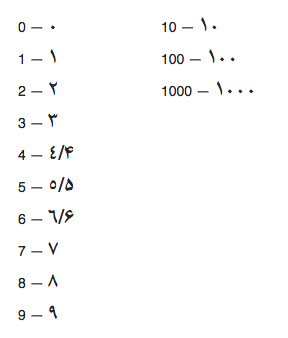
This is what the numerals look like. The numbers 4, 5, and 6 have a form different from the Arabic one, but the Arabic form can be found here and there. A bit more of a historical excursion: Iran is the former Persia, and the name Iran refers to its being the land of the Aryans. Importantly, Iran is not an Arab country, and you shouldn't tell an Iranian he's an Arab: it may be taken as an insult. References to a dislike of Arabs run through all of Iran's history, right up to the not-so-distant Iran–Iraq war and the current low-grade conflict with Saudi Arabia.
Ten days before the trip I started learning Farsi with Rosetta Stone, and I learned to count, to say the simplest phrases, and even to read a little. The particular difficulty of Arabic and Farsi is that almost every letter in these languages has four forms: standalone, at the beginning, in the middle, and at the end of a word. Words are written right to left, and numbers left to right.
But even basic Farsi skills came in handy — in Iran almost no one speaks English.
Before the trip I'd scattered posts across city groups on couchsurfing. I wrote that we were coming and would be glad to meet anyone willing to show us their city. It turned out that Iranians are universally on Telegram and WhatsApp. Within a week more than ten people reached out to me, and from corresponding with them I learned a lot of details about local life. Iranians struck me as the most active couchsurfing users; my inbox on the site was so full that I couldn't reply to everyone, and I had to delete the posts from the groups. As I wrote, they either don't know English or know it poorly, so communication sometimes looked very absurd.
A couple of days before the flight, Hooman from Tehran wrote to me. He knew English perfectly, and offered to go with him and his wife Bahar (in Farsi it means "spring") for a walk to Mount Damavand near Tehran. You can't turn down an offer like that, especially since Tehran has few interesting and historic places. Throughout the twentieth century the city authorities systematically demolished historic buildings and even sacrificed the fortress walls — Semyon and Tanya, for their part, decided to spend only one night in the city and head straight for Kashan.
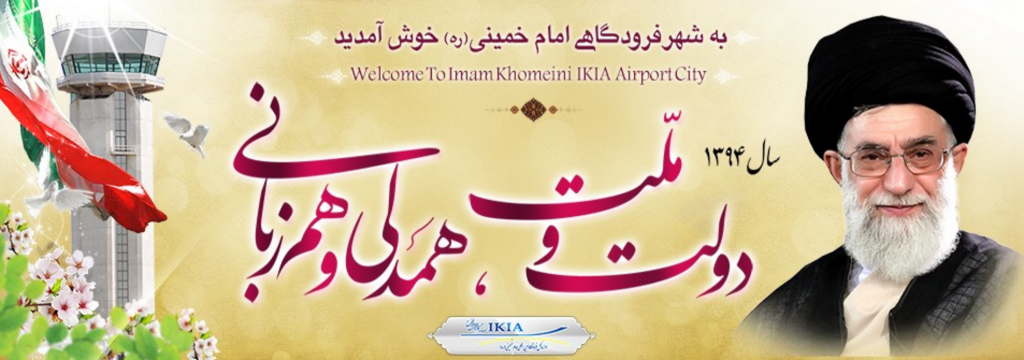
At Imam Khomeini airport a taxi picks us up and takes us to the hotel. Many things here are named after the leader of the Islamic Revolution, Imam Khomeini — it's like a street/avenue/square/metro named after V.I. Lenin.
Our taxi is a Peugeot, looks like a 1999 model, with a perfectly new interior. The cars on the roads look no younger. Yet these cars are new — Iran's auto plants produce only late-'90s models. And foreign cars are very expensive; customs duties of 200–300% leave the broad population no chance of buying even a modest Hyundai. A Mercedes SLK or a Porsche signals not merely a high but a very high status for its owner.
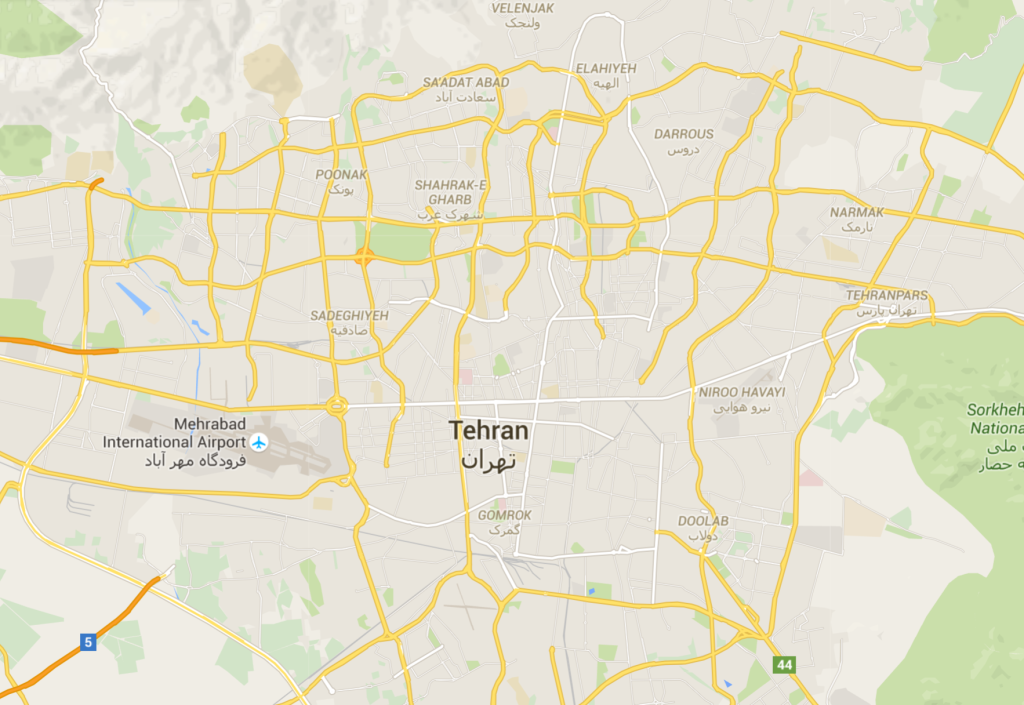
Tehran is a huge city, and it's divided into "squares" by expressways. The size of the city is comparable to Moscow, but the taxi drivers don't use GPS at all, they simply know where to go. Perhaps this division makes the geography easier to remember. The taxi drivers don't speak English at all, and it's extremely hard to learn anything from them. I'd happily communicate with gestures, but they have to keep watching the road. The traffic here is very unlike ours. By the look of it, there are no rules (I don't think I'm far from the truth); cars run double red lights and double yellows without slowing. There are only two clearly noticeable patterns — everyone yields to everyone, and whoever honks first has the right of way. It seems these two rules are enough for accident-free traffic. You don't see any traffic-police posts or their cars. Dented cars are very rare.
By the way, the crosswalks here are pretty nominal. No one will stop at unsignalized crossings, but there's a chance they'll slow down. We had to dash across an unsignalized crossing of a four-lane road. At first it's uncomfortable, but once you grasp the general principle of the traffic, moving perpendicular to the flow poses no trouble.
We arrive at the hotel after midnight and go to bed closer to two. We have to get up at 6 a.m.; Hooman and Bahar are picking us up early so we'll have time to go into the mountains and drive around the city. Four hours of sleep isn't too great, but mountains are better than sleep.
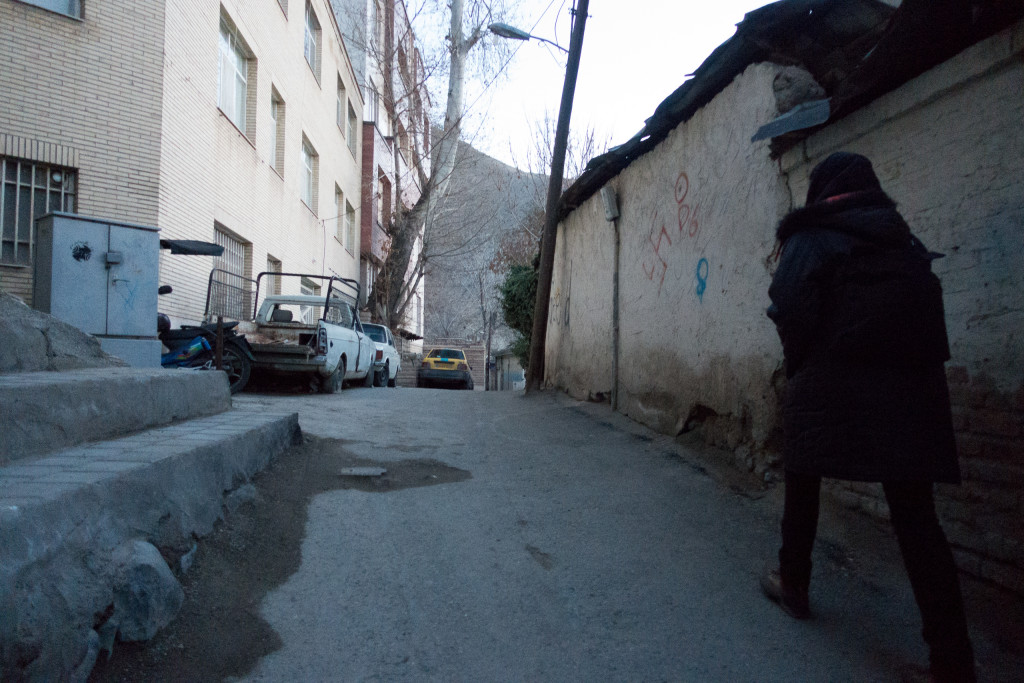
The workday in Iran starts at 7–7:30 and ends at 16:00–16:30, and such an early rise is an attempt to beat the morning traffic jams. We drive to the northern edge of the city, leave the car, and start walking up. The suburbs gradually give way to village, and that turns into a mountain trail with the occasional house and café along it.
We walk slowly uphill and talk about all kinds of topics, from the history of Iran to everyday matters.
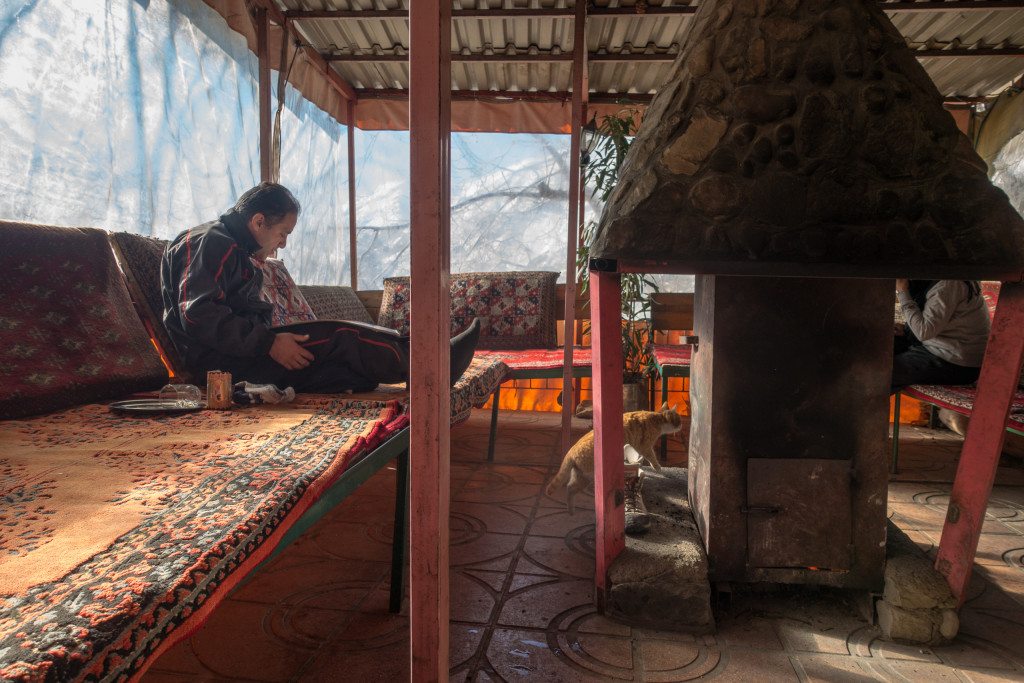
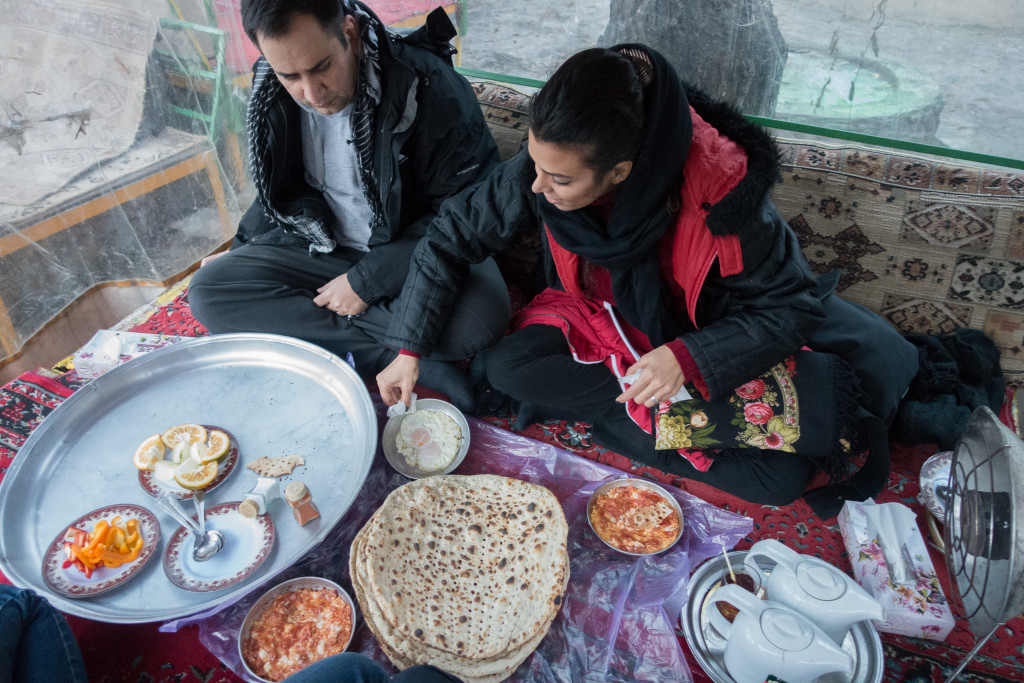 The cafés are closed for now; early in the morning on weekdays there aren't many people keen to hike up, so we simply keep going in hopes of finding at least one open establishment. Hooman and Bahar are freelance web designers (this is where my notions about Iran finally broke down), and they can afford to spend a weekday hiking in the mountains with Russians. Luckily, one of the cafés, run by Afghans, is open, and we take a seat inside a tent draped with polyethylene. There's a gas heater here, and we tuck into a hearty breakfast — omelet, vegetables, and bread.
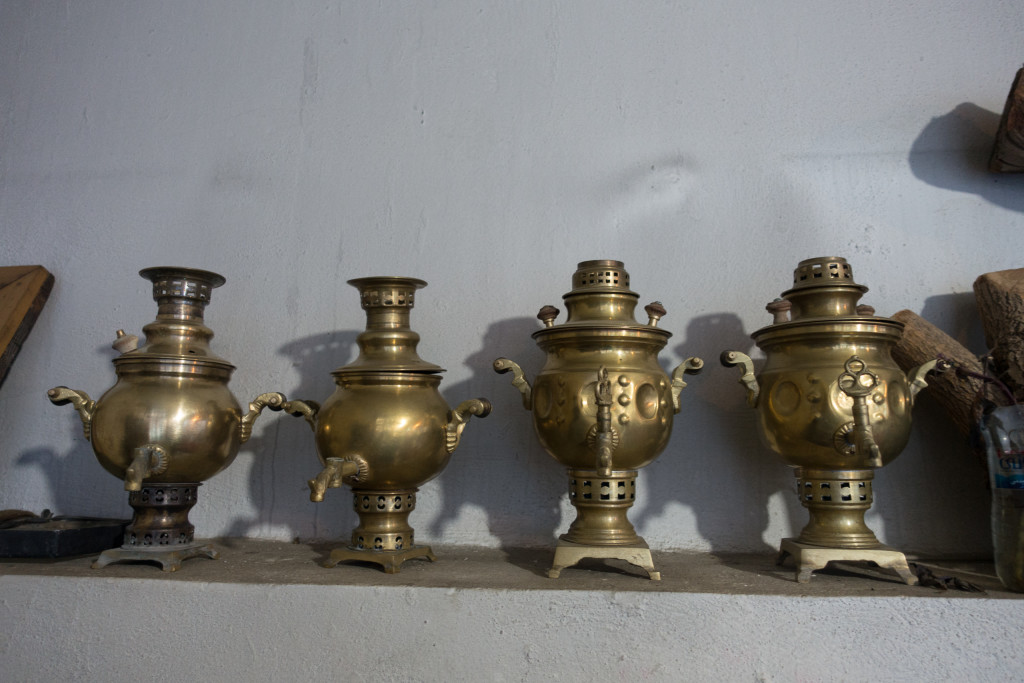
By the way, you can find a samovar everywhere here, and not as a decorative element but as a real working tool. The samovars are mostly gas-powered.
Breakfast drags on, we drink tea and chat cheerfully. The two of them are just great; we quickly hit it off. We give them Gzhel cups and a Pavlovo Posad shawl (in the photo it's in Bahar's hands). It turns out that no matter how "Russian" a pattern we choose, it's well known in Iran too, and in Azerbaijan, where Bahar's grandmother is from.
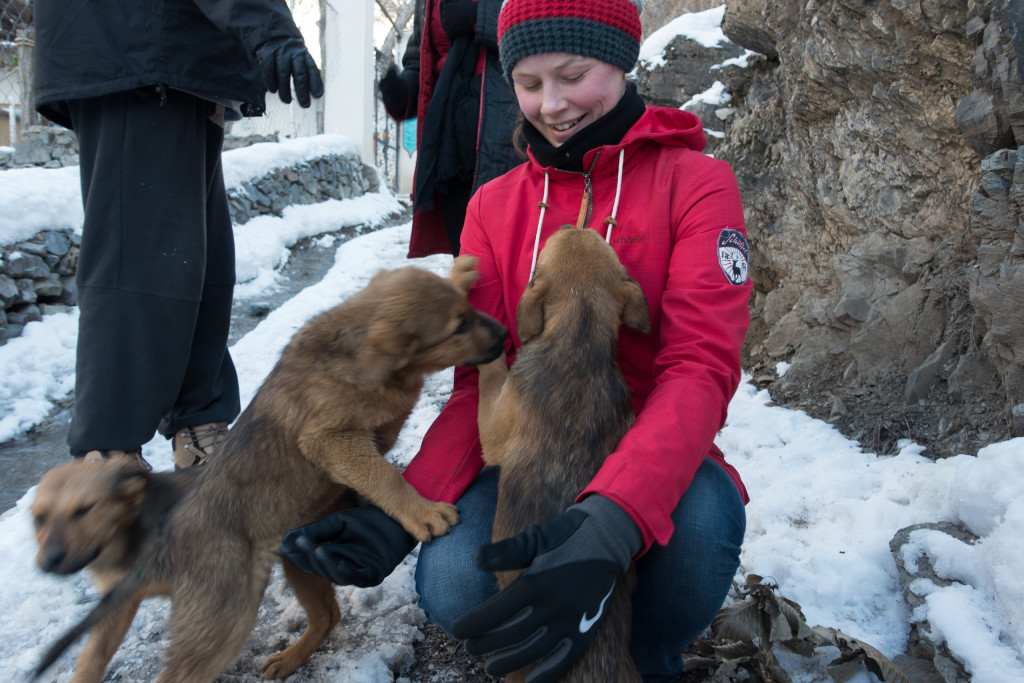
Iran is an Islamic republic, a theocracy trying to live by the laws of Islam. In Islam the dog is an unclean animal. Keeping dogs is forbidden in the city. Neighbors can report you, and a little dog faces confiscation and being put down. Outside the city people don't observe the law so zealously, and dogs can be found everywhere. But they're not really looked after, and it seems they feed on scraps at the cafés. Hungry, stone-colored dogs roam the slopes and carefully examine the trash bins set out along the mountain trail. Speaking of the law, the attitude toward it in Iran is akin to ours. "This is illegal, this is very illegal, and this is completely illegal. Though the real question is how much money you have."
Iranians love taking selfies and photos of each other. Hooman takes several group photos and shoots individual ones. We don't fall behind, taking selfies and photos in return. The two of them immediately set them as their profile pictures.
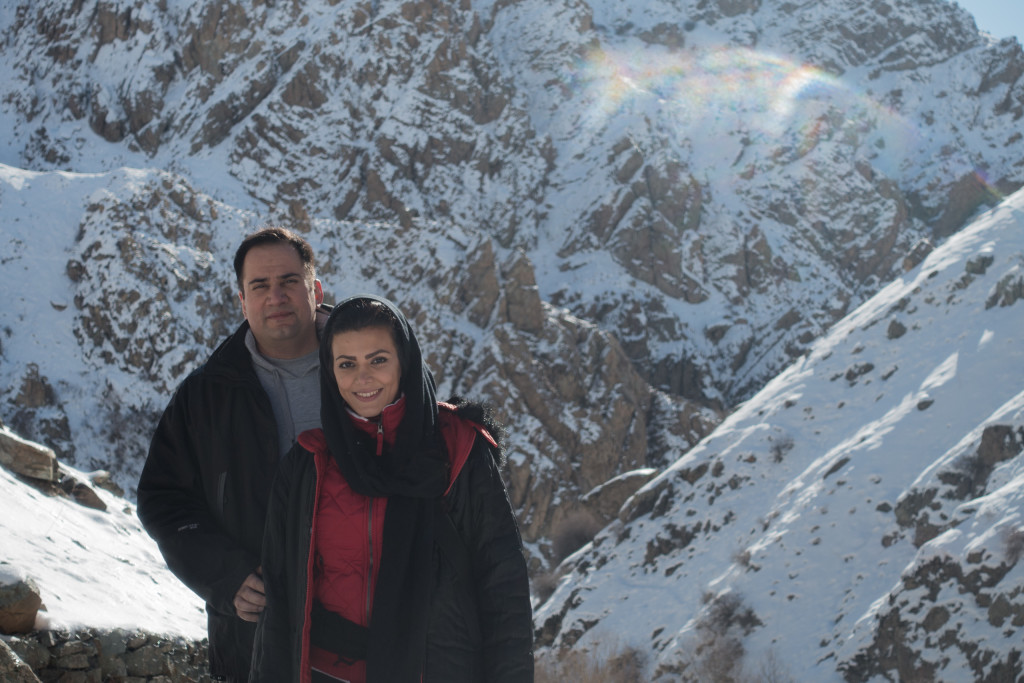
It's already almost 10 a.m., time to head back. Reaching the summit of Damavand is no quick matter, and it's not the summit we're interested in anyway. On the way down we stop at one large, popular café. A few trekking enthusiasts have already settled in. They're all locals, asking us various questions, which we answer through Hooman.
They bring us lentil soup, a traditional dish of Iranian cuisine, and we drink freshly squeezed pomegranate juice and tea. In Farsi tea is "chai." Two teas is "do chai" — simple.
In Tehran the sun is already shining in full force, you could even call it hot. The day before our arrival it had rained and cleared the city's air — usually there's smog everywhere. We drive slowly through the traffic, and the two of them show us how people live in Tehran. The northern districts are more prestigious, and we come across very beautiful buildings, modern residential blocks. The houses are mostly 3–5 stories, occasionally there are 10–12-story buildings. As in Baku, most buildings are faced with yellow limestone.
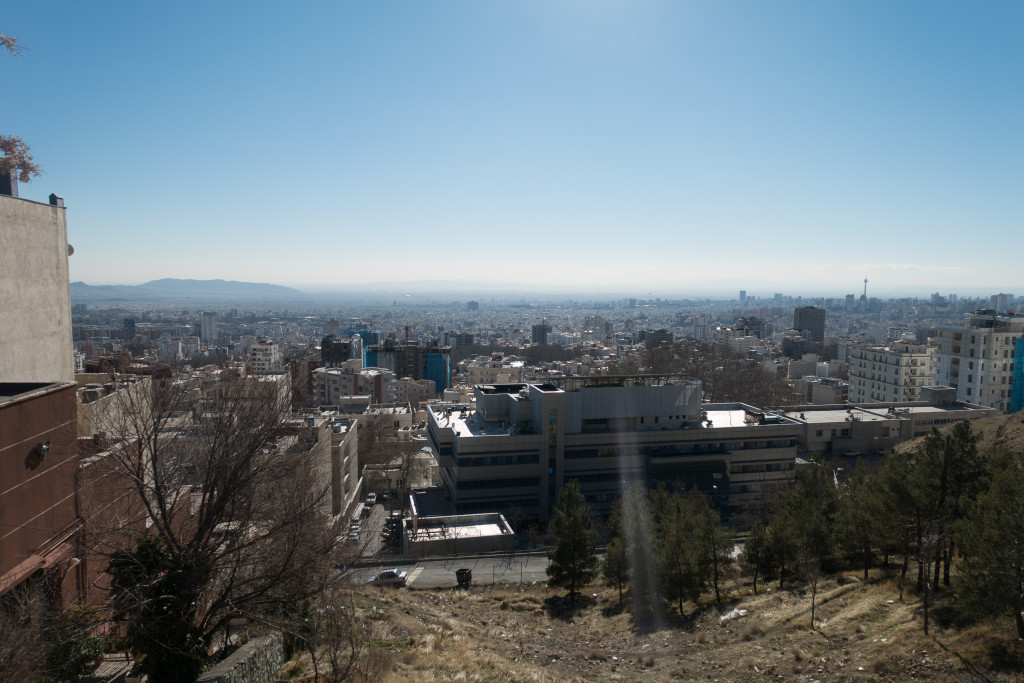
Here's the view from the northern districts to the south. Tehran is enormous.
The two of them take us to a restaurant that makes the best chicken kebab in the city. In Iran every restaurant is known for one or two dishes it makes especially well. You can only learn this from locals; Foursquare is nearly dead here, and TripAdvisor has reviews by tourists, who basically aren't of interest.
After lunch we're invited to their home. You can't turn down an offer like that. Hooman and Bahar live in the northwest of the city, in a small three-story building. The entrance has 6 apartments, and each apartment has one parking space in the underground garage. Iranian law requires the developer to provide at least one parking space per apartment. A developed country!
We spend a long time figuring out how to make the Sony camera send photos to the Samsung TV over wi-fi. Then until late evening we show each other various photos. Hooman shows us incredibly beautiful photos of northern Iran, Isfahan, and other cities. We answer with photos of the White Sea.
As much as we'd like to talk into the dead of night, we have to head back to the hotel. At 6 a.m. a taxi will already be waiting for us to Dizin, a ski resort near Tehran.
We reach the hotel and go to the local fast-food place to buy sandwiches for tomorrow. While we wait for the order, a fast-food worker comes up to us and says in broken English that three women sitting at a table want to take a photo with us. We don't mind. They want not only to take a photo but to chat. Of course, our knowledge of Farsi isn't enough, nor is their knowledge of English. Still, we learn that one of them is a nurse from the neighboring hospital, and that they all came here from Kurdistan. The woman invites us to her home for tea, but we have to decline the invitation, or we won't sleep at all.
Jan 4Dizin
That early rise again. Breakfast isn't served to us at 6 a.m., but there's tea and apple pie. By eight in the morning we're already at the lifts and heading to the rental shop to get skis and a board. You can't look at the rental gear without tears: the bases are damaged on nearly all the skis and boards, and the boots are very old.
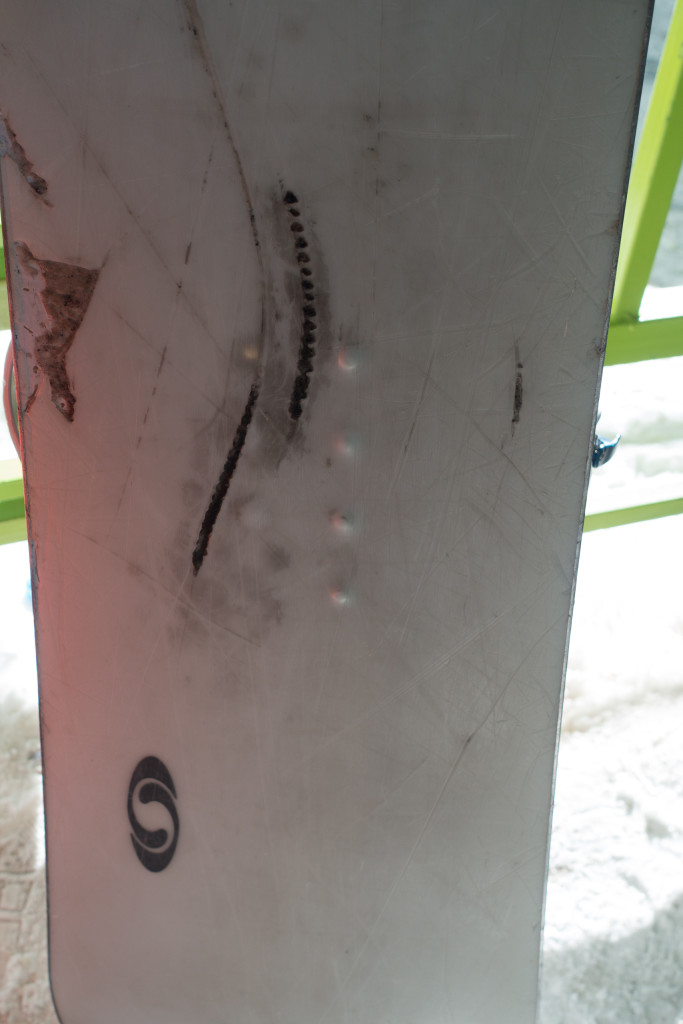
Dasha chooses a board not by her height, its stiffness, or the condition of the base, but by how reliable the bindings are. Sharpened edges are too much to dream of. On the other hand, they don't take a deposit for gear like this.
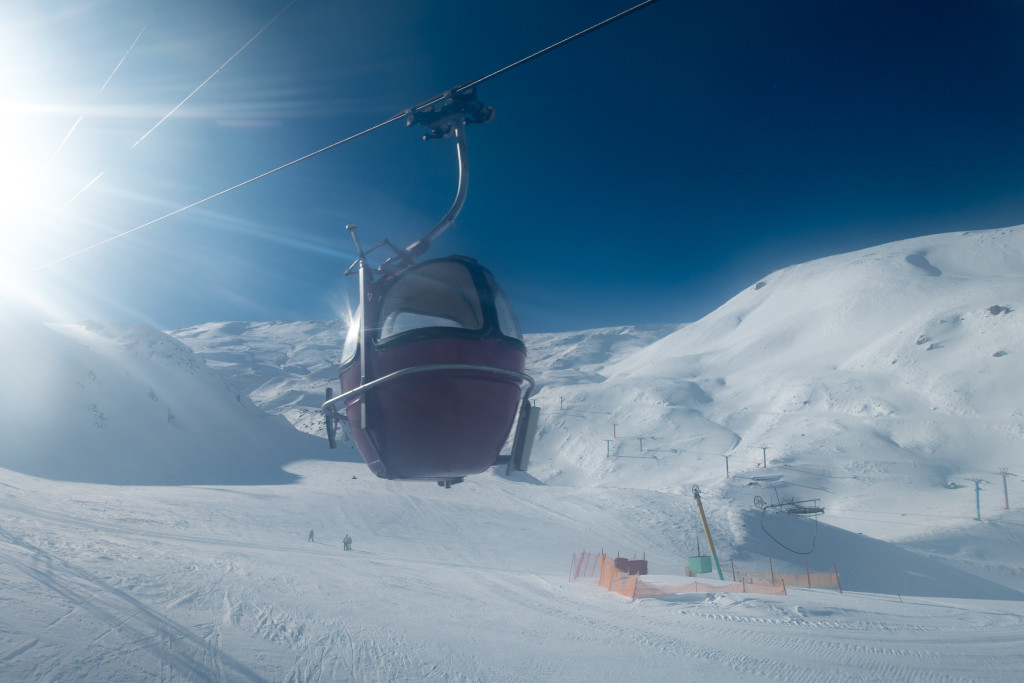
The gondola cabins are a topic of their own. I think they looked stylish in the early '80s. A purple little shell that, if you try, can hold 4 people. Snowboards have to be carried inside, but they don't fit entirely and stick out.
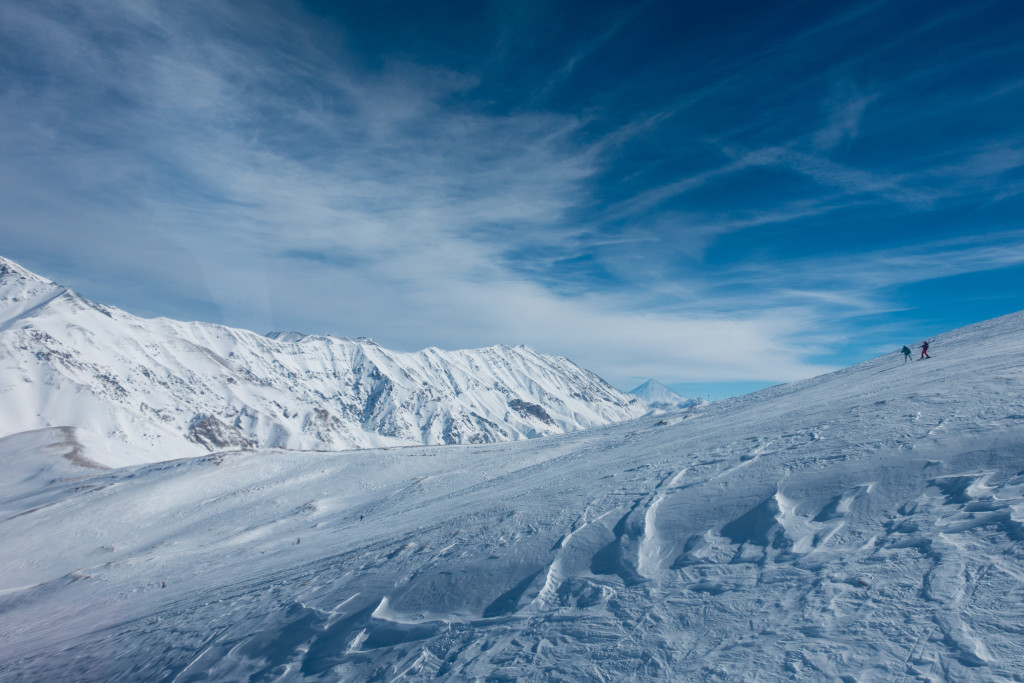
Otherwise the place is very pleasant. The second stage takes you up to 3,500 meters above sea level; Dizin is one of the highest ski resorts. At 2,700 meters there's a loop where cross-country skiers train. Later, in Shiraz, we met a group of Russians who'd spent 4 days here. They say the hotels are good and the service is fine.
All around are Iranians on fairly new skis and in good riding gear; you hardly hear any foreign speech. We came across only one couple, from Germany and Belgium. We shared our impressions of Iran and our plans with them.
We rode from the opening to the closing of the lifts, had a great deal of fun, and headed back, admiring the fantastic mountain scenery along the way. Along the road numerous cafés and restaurants had opened up. Each one has a tout inviting you into his establishment in his own way. One little shop had even hung up a powerful laser that shone like a pointer toward it. Unfortunately, we'd already eaten for a huge sum at Dizin. In this the resort is like all the others.
I catch myself starting to read the English text on signs right to left. 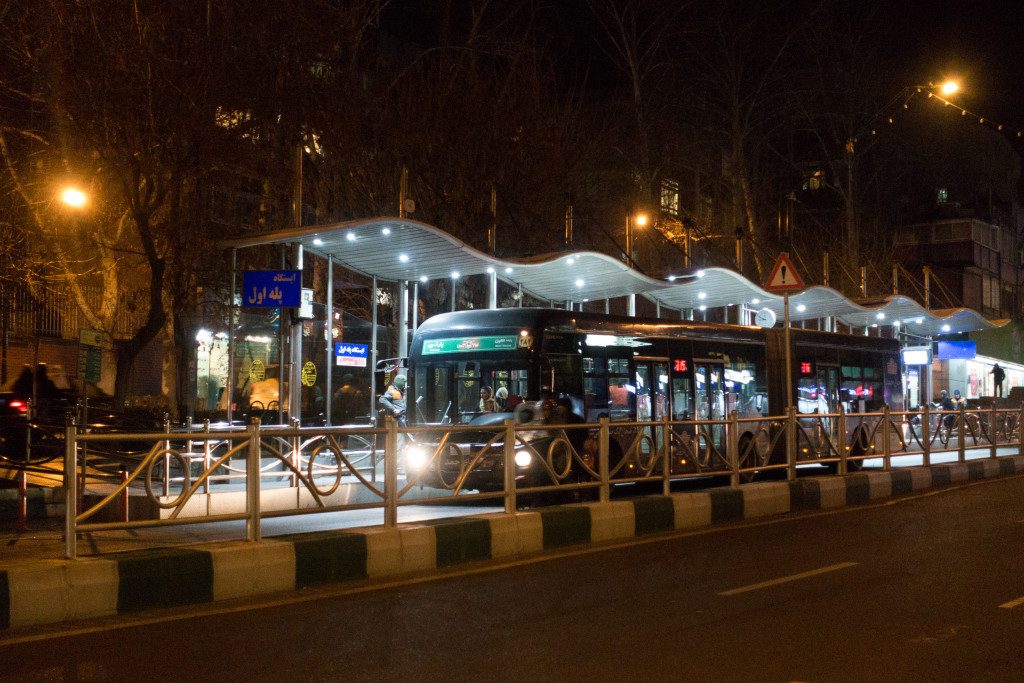
We set off to wander around nighttime Tehran. We never did go into the metro, but we did check out the dedicated bus lanes. The buses run fairly often, but you need Farsi to figure out where to go. While I'm trying to find out from a man in uniform at the stop what he does, a girl comes up to us and helps sort out the matter. The man collects fares, and our new acquaintance is a teacher at an English-language school, although her boyfriend in an expensive suit doesn't speak it at all. We're going the same way, and we walk several blocks, chatting about everything under the sun.
It's late, time to sleep. Tomorrow another early rise and the road to Isfahan.
Part 3 — Isfahan and Shiraz was never written. We went on to reach Isfahan and Shiraz, but the account of that part remained unwritten — maybe someday.